
A roof that is genuinely built for long-term weather resistance is the product of several decisions working together, rather than any single material or feature doing all the work on its own. Tile selection, fixing frequency, ridge and verge detailing, and the quality of flashing all need to be specified with the same level of care and attention, because a roof is only ever as strong as its weakest detail. On an exposed property around Nailsea, cutting corners in one area, however small, can undermine the benefit of getting everything else right elsewhere on the same roof, which is why a genuinely thorough specification looks at the whole building rather than a handful of headline features.
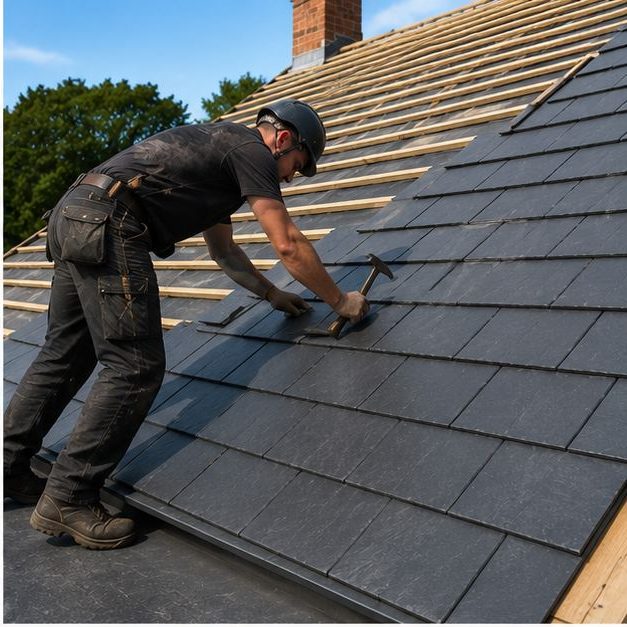
It also helps to think beyond the immediate weather a roof faces on the day it is installed and consider how conditions may vary from one winter to the next over its working life. Storms of varying severity, sustained periods of driving rain, and the corrosive effect of salt-laden coastal air all place different demands on a roof over its lifetime, and a well-specified installation should be able to handle that full range rather than only the average conditions seen in a typical, unremarkable year.
The building itself matters just as much as the materials chosen for it. Nailsea's mix of older village-core cottages and larger estate housing built from the 1960s onward means no two roofs face quite the same combination of pitch, structure, age and exposure, so a specification that has proven reliable on one house cannot simply be assumed to suit the next one along the same road without proper thought being given to the differences between them.
A roof built with all of this in mind should, in principle, need little more than routine checks for a great many years afterwards. That is really the point of getting the specification right at the outset: not to eliminate maintenance altogether, since no roof achieves that, but to reduce it to occasional, planned inspections rather than a recurring cycle of emergency repairs each time the weather turns. For a family settled in Nailsea for the long term, that difference is felt directly in fewer disrupted weekends and fewer unexpected bills.
This is the thinking behind how Brunel Roofing Bristol approaches every new roof installation in Nailsea: assessing the individual building, its exposure and its history, then specifying materials and fixings to match, rather than applying a standard package regardless of the conditions the roof will actually face once the scaffolding comes down.
If you would like your home assessed with long-term weather resistance in mind, contacting Brunel Roofing Bristol for a quote is a straightforward way to get a specification built around your particular property rather than a generic one borrowed from somewhere else entirely.
Get a Free Quote for New Roof Installations in Nailsea
Every roof is different — the fastest way to get an accurate answer is a quick chat with our team.