
Yes, and it's actually one of the most frequent causes of roof leaks that homeowners struggle to pin down, because the damage often sits hidden under tiles or slates where it can't be seen from the ground.
How Flashing Fails
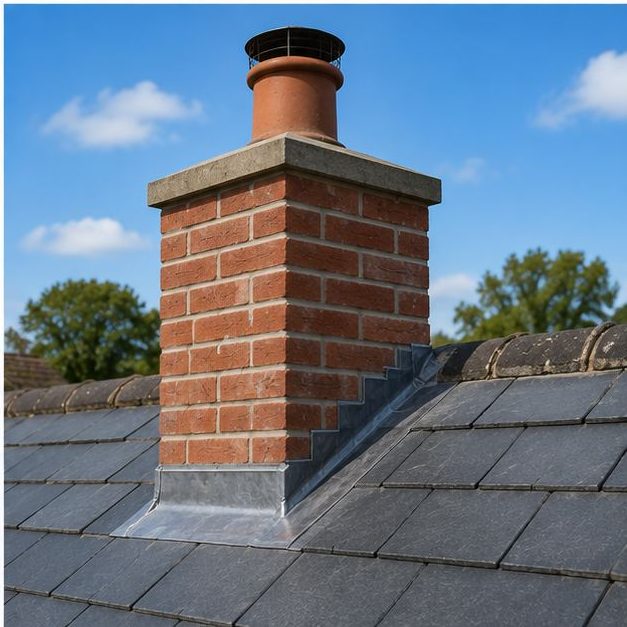
Flashing is the metal seal, usually lead, that runs around the base of the chimney where it meets the roof, and it's designed to stop water tracking into that junction. Over time it can lift away from the brickwork as mortar erodes, crack from thermal movement as it heats and cools, or simply corrode through in older or thinner material. Once there's even a small gap, wind-driven rain finds its way in surprisingly easily, and the problem tends to worsen with every storm rather than staying the same size.
Why the Damage Spreads
Because flashing sits at a junction rather than an open surface, water that gets past it often runs down the inside of the roof structure rather than dripping straight through, so by the time you see a stain on a bedroom ceiling the leak could have been running for weeks or months. Left unchecked, this can lead to rotten timber, damaged insulation and damp problems that cost far more to put right than the flashing repair itself would have done, and in the worst cases can affect the structural timbers supporting the roof.
Sorting It Properly
A proper flashing repair means refitting or replacing the lead correctly, dressing it back into the brickwork joints, and checking the surrounding pointing and tiles at the same time, rather than simply smearing sealant over the gap as a quick fix. Sealant-only repairs tend to fail within a season or two, whereas properly dressed lead can last for decades. Brunel Roofing Bristol handles flashing repairs on all types of pitched, tiled and slate roofs across Bristol, with a free inspection to confirm exactly what's needed before any work starts.
Get a Free Quote for Chimney Repairs
Every roof is different — the fastest way to get an accurate answer is a quick chat with our team.