
The lead, tile or fibreglass lining of a roof valley is only ever as good as the timber structure supporting it. Beneath every valley sits a valley board or rafter, fixed at the angle where the two roof slopes converge, and if that timber has been allowed to absorb moisture over a long period, even a beautifully installed new valley lining will not perform as it should once fitted on top of it.
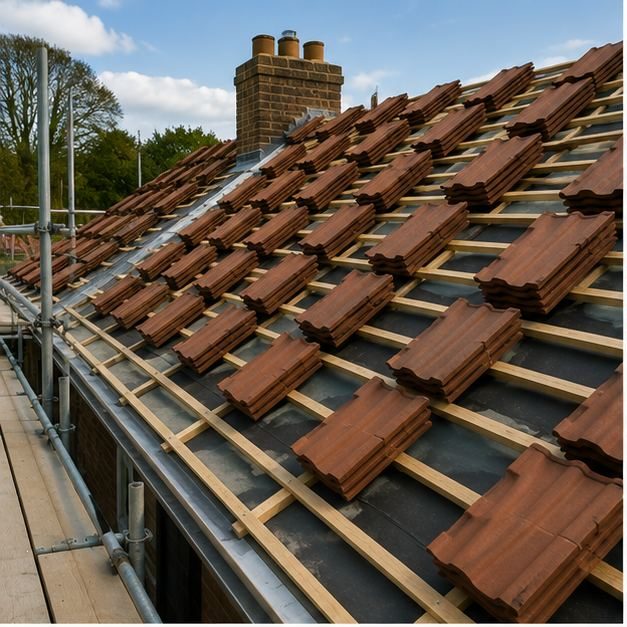
This is a particularly relevant issue when re-roofing older properties in Hotwells, where a valley may have been quietly letting in small amounts of water for years before any leak became noticeable inside the property. Timber can remain damp and gradually deteriorate for a long time before it shows obvious external signs, which is why stripping back the old covering during a re-roof often reveals problems that were previously hidden from view. Once the old valley lining and surrounding tiles have been removed, the exposed timber can be properly inspected for soft spots, rot, or fixings that have corroded and lost their grip. Any timber found to be compromised needs to be repaired or replaced before the new valley lining goes on, since covering damaged timber with a smart new finish would only mask a structural problem rather than solve it. The checks carried out at this stage go beyond a quick visual look. A roofer will typically probe suspect timber to see how far any softening extends, check that valley boards remain firmly fixed to the rafters beneath, and confirm there is no ongoing source of moisture, such as a nearby chimney or wall junction, that could affect any repair. On a Hotwells property where a valley has clearly been leaking for some time, it is not unusual for the affected section of timber to extend further than the visible staining inside the loft would suggest.
Where replacement timber is needed, it is fitted to match the original pitch and alignment of the valley precisely, since even a slight discrepancy at this stage can throw off how well the new lining sits and how evenly water drains once the roof is finished. Getting this right the first time avoids the need to revisit the same section of roof again in a few years.
This stage of the work is one of the reasons a full re-roof offers better long-term value than a series of surface-level repairs. A repair carried out on top of an existing roof cannot always confirm what condition the valley timbers are in, whereas a proper re-roof gives the opportunity to check, and correct, this hidden but important part of the structure.
When Brunel Roofing Bristol carries out a re-roof in Hotwells, checking valley timbers is a standard part of the process, giving you confidence that the new roof is being built on a sound foundation rather than over problems that were never actually resolved.
Get a Free Quote for New Roof Installations in Hotwells
Every roof is different — the fastest way to get an accurate answer is a quick chat with our team.