When it's time to re-cover a flat roof in Greenbank, felt and EPDM rubber are the two materials most homeowners end up comparing. Both have a long history of use on UK flat roofs, but they behave quite differently over time, and understanding those differences can help with deciding which is right for a particular roof and a particular budget.
Traditional felt roofing is built up in multiple layers, either torch-applied or bonded with hot bitumen, bonded together to form the finished covering. It has been used for decades and, when installed well, performs perfectly adequately for a number of years. Its main vulnerability tends to be at the seams between each layer and roll, which are the points most likely to open up as the material ages and becomes less flexible, particularly around upstands and detail work. Torch-on methods in particular require an open flame during installation, which adds an extra safety consideration compared with cold-applied alternatives.
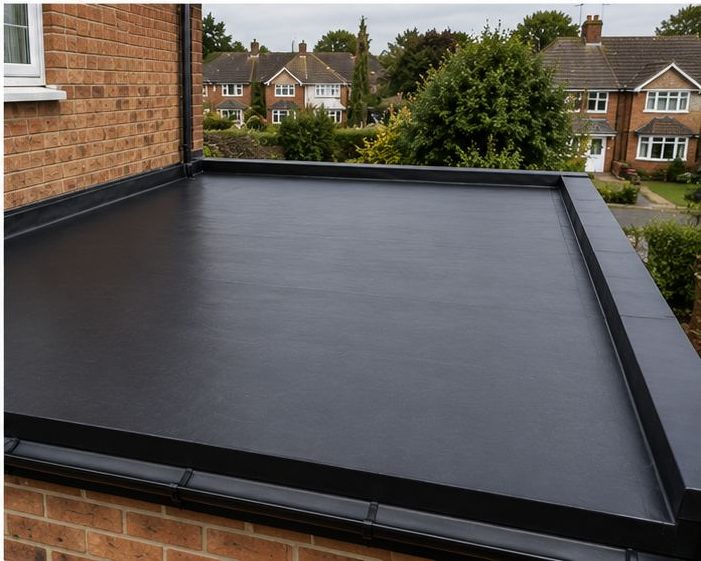
EPDM, by contrast, is a synthetic rubber membrane that's typically installed in a single large sheet, or with far fewer joins on larger roofs. Fewer seams generally means fewer potential entry points for water over the life of the roof, and the rubber itself stays notably more flexible through the temperature swings that a UK roof experiences across the seasons, from summer heat to winter frost.
As a general rule of thumb within the roofing industry, felt roofing often needs replacing within around ten to fifteen years, whereas EPDM rubber roofing is commonly guaranteed for twenty years or more by manufacturers. These are typical industry figures rather than guarantees for any specific roof, since actual performance always depends on installation quality and how the roof is looked after, but they do give a useful sense of the general gap in durability between the two materials over a full working life.
EPDM also tends to hold up well against UV exposure and doesn't become brittle in the way older felt can, which matters on the south-facing extension roofs common across Greenbank that get a lot of direct sun through the year. It resists cracking and splitting far better than felt does once it starts to age, and this resistance tends to be most noticeable after the roof has already seen a decade or so of service.
Neither material is entirely maintenance-free. Both benefit from an occasional check for debris in gutters and outlets, and any signs of wear addressed early rather than left. EPDM's simpler, more seamless surface generally makes these checks and any necessary repairs more straightforward, since there's less to inspect and fewer joints that could be the source of a problem. Simply clearing debris from a roof surface twice a year is often enough to keep either material performing as it should.
It's worth remembering that the covering itself is only part of the picture. A well-installed felt roof on a sound deck with good drainage will usually outperform a poorly installed EPDM roof, so the quality of installation and the condition of what lies underneath both matter just as much as the material chosen, if not more so.
For homeowners in Greenbank weighing up felt against EPDM for a flat roof replacement, Brunel Roofing Bristol can talk through both options honestly, assess the specific roof in question, and recommend whichever approach suits the property and budget best.
Get a Free Quote for EPDM Roofing in Greenbank
Every roof is different — the fastest way to get an accurate answer is a quick chat with our team.