
When it comes to choosing a flat roof covering for a Nailsea property, EPDM rubber membrane and GRP fibreglass are two of the most commonly compared options, and both have a place in modern roofing. Understanding how they differ helps make sense of which is likely to suit a particular roof.
GRP, often called fibreglass roofing, is applied as a liquid resin that's laminated with glass fibre matting and then cures into a rigid, seamless surface. It gives a hard-wearing, glossy finish and can be a good option on roofs with a lot of foot traffic, but because it's rigid rather than flexible, it relies heavily on a stable, well-prepared deck underneath — any movement in the structure over time can put stress on the laminate and, in some cases, lead to cracking.
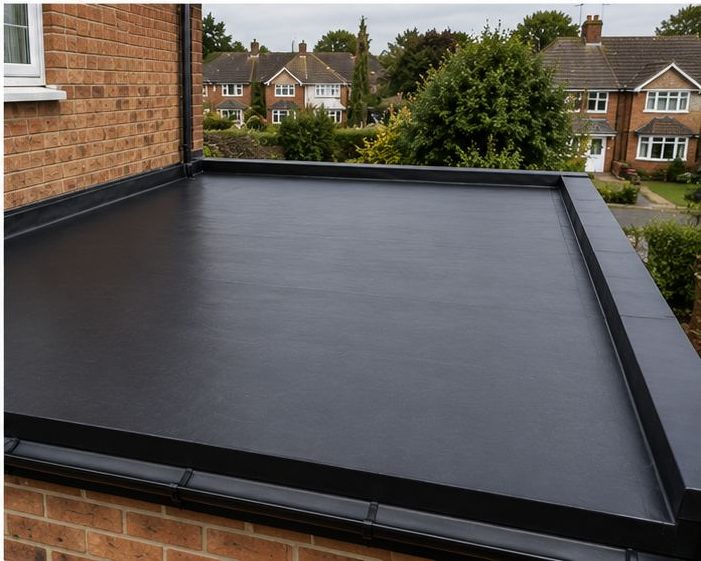
EPDM, by contrast, is a flexible rubber membrane supplied in large sheets and bonded to the roof deck. That flexibility means it can accommodate a small amount of natural movement in the roof structure without cracking, and because it's supplied in large sheets, there are generally fewer joints across a typical roof compared with GRP installations that involve multiple laminated layers and detail work at every corner and upstand.
Installation conditions matter too. GRP application is more sensitive to weather during the fitting process, since the resin needs the right temperature and dry conditions to cure properly, whereas EPDM's bonded-sheet method is generally more forgiving of typical UK weather during installation, which can be a practical consideration for scheduling work in Nailsea.
In terms of durability, EPDM typically lasts significantly longer than felt roofing, and is broadly comparable to or ahead of GRP in terms of longevity when both are installed correctly, though GRP's rigid surface can be more prone to issues if there's any underlying movement or if the laminate is damaged, since repairs to a cracked GRP surface can be more involved than repairing a puncture in a rubber membrane.
Neither material is universally better — the right choice depends on the specific roof, its shape, how it's used, and what's underneath it. A roof with a lot of foot traffic or an unusual, highly detailed shape might suit GRP well, while a roof that benefits from flexibility, fewer joints and straightforward long-term maintenance often points towards EPDM.
Cost is another point of comparison worth understanding, though it's tied closely to the specifics of the job rather than the material alone. Because GRP installation involves multiple layers and curing time, and EPDM installation involves large sheets and adhesive bonding, the labour and material costs on any given Nailsea roof depend heavily on its size, shape and complexity rather than one material simply being cheaper than the other across the board.
If you're weighing up EPDM against GRP for a roof on your Nailsea property, Brunel Roofing Bristol can assess your specific roof and give you honest, practical advice on which option is likely to serve you best, rather than defaulting to one material regardless of the job.
Get a Free Quote for EPDM Roofing in Nailsea
Every roof is different — the fastest way to get an accurate answer is a quick chat with our team.