
Yate homeowners looking into flat roofing options will typically come across three main materials: traditional felt, GRP fibreglass, and EPDM rubber. Each has its place in the roofing trade, and understanding the genuine differences between them, rather than relying on marketing claims from any one supplier, helps in choosing the right option for a particular roof.
Felt roofing is the most traditional of the three and remains widely used because it is a familiar, well-understood system. Its main drawback is durability. Felt roofs often need replacement or significant repair work within roughly 10 to 15 years, particularly in a climate like the South West's, where sustained exposure to rain and temperature swings gradually breaks down the material's surface and seams over time.
GRP fibreglass roofing offers a tough, seamless-looking finish once fully cured, and has become popular over recent decades as an alternative to felt. However, GRP systems are built up from multiple layers and rely heavily on correct application in the right weather conditions, and issues can arise around joints, edges and detailing if the installation is rushed or carried out in unsuitable conditions, leading to cracking or delamination in some cases.
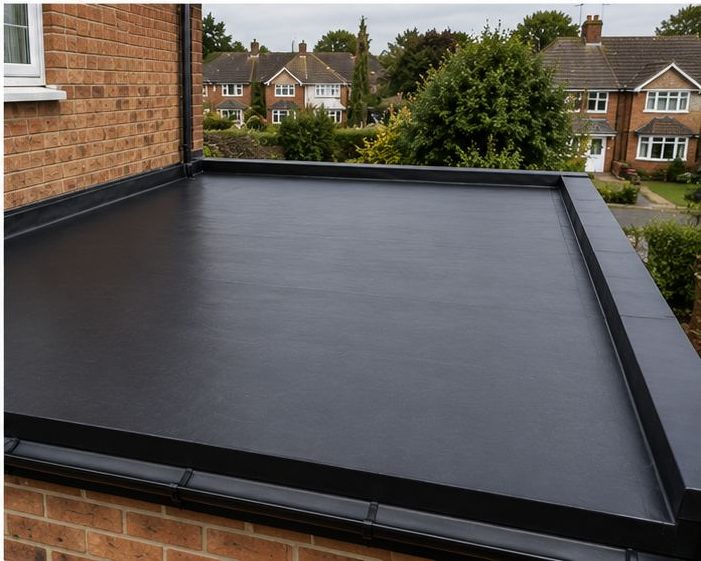
EPDM rubber roofing is generally regarded as more durable and longer-lasting than felt, and is commonly guaranteed for periods of 20 years or more by manufacturers, reflecting real confidence in how the material weathers over time. Supplied in large sheets, EPDM installations typically involve far fewer joints than GRP systems, which reduces the number of potential weak points across the finished roof.
That said, no material performs well in isolation from everything else about the roof. Whether a Yate homeowner chooses felt, GRP or EPDM, the condition of the roof deck, the quality of the drainage falls, and the detailing at edges, outlets and any junctions with walls or chimneys all have a major bearing on how the finished roof actually performs, sometimes more so than the choice of covering material itself.
Cost differences between the three materials exist, but they are only one part of the picture. A cheaper felt roof that needs replacing again within 10 to 15 years may end up costing more over time than a slightly more expensive EPDM installation that lasts considerably longer with less maintenance in between, which is worth weighing up when comparing options rather than looking at the initial price alone, especially once the disruption of a second re-roof within a decade or so is factored in.
For many Yate properties, particularly garages, extensions, dormers and porches, EPDM's combination of durability, fewer joints and flexibility makes it a strong all-round choice, though GRP and felt each remain reasonable options in certain situations depending on the roof's specific shape, budget and existing construction, and it is worth having an experienced roofer explain the trade-offs for your particular property rather than defaulting to whichever material happens to be cheapest on paper.
Brunel Roofing Bristol can talk through the genuine pros and cons of each material for your specific Yate roof and recommend the option that makes sense for your property, backed by a 15-year guarantee and fully insured work.
Get a Free Quote for EPDM Roofing in Yate
Every roof is different — the fastest way to get an accurate answer is a quick chat with our team.