
Tiles are usually the most visible part of a Henleaze roof, but they are also one of the clearest indicators of how well the covering as a whole is coping with age. Both clay and concrete tiles are manufactured to last for decades, yet the process that eventually wears them out is a slow one, driven by constant cycles of rain, sun, frost and thermal expansion. Learning to recognise brittleness in tiles gives homeowners an early, practical way to judge roof age without needing to climb up and inspect every surface.
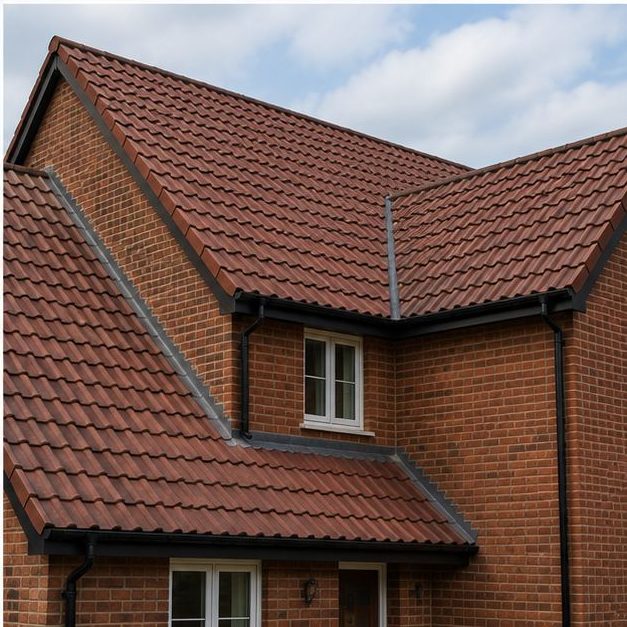
With concrete tiles, which are common on many of Henleaze's later inter-war and post-war homes, the first sign of ageing is usually a loss of surface texture, with the once slightly rough, coloured coating wearing smooth and pale, and small granules washing into the gutters after heavy rain. As the tile ages further, hairline cracks begin to appear, often starting at the nail holes or the nib that hooks over the batten, points of concentrated stress that eventually cause the tile to snap under the weight of a person or even a heavy fall of leaves. These cracks are not always obvious from a distance, and it is only when a roofer walks the roof or examines it closely that the full extent of the brittleness becomes clear.
Clay tiles, more often found on Henleaze's older, traditionally built properties, tend to fail slightly differently. Rather than losing surface coating, they gradually lose the fine-grained density that makes them resistant to frost, so that trapped moisture freezing inside the tile over successive winters causes small flakes or chips to break away from the surface, a process sometimes called spalling. A tile that once had crisp edges and a solid, dense sound when tapped will, with age, start to sound dull and feel noticeably lighter, a reliable clue that it has become porous and brittle, and this same weakness often shows up first on the more exposed, weather-facing slopes of the roof.
Brittle tiles matter for more than appearance. Once a tile has lost its structural integrity, it becomes far more vulnerable to cracking in strong wind, under snow load, or simply from routine access during gutter cleaning or aerial work, and a roof with many tiles in this condition will keep generating new faults faster than they can reasonably be repaired. At that stage, replacing individual tiles becomes a losing battle, because the surrounding tiles are usually only a little behind in the same ageing process.
If tiles on your Henleaze roof feel unusually light, sound dull when tapped, or have started chipping and cracking more often than in previous years, it is a strong sign that the covering as a whole is approaching the end of its useful life. Brunel Roofing Bristol can assess the extent of the brittleness across the whole roof and advise whether targeted repairs are still viable or whether a full re-roof would be the more sensible long-term choice.
Get a Free Quote for New Roof Installations in Henleaze
Every roof is different — the fastest way to get an accurate answer is a quick chat with our team.