
Fishponds has a good number of Victorian and Edwardian terraces where the original clay tiles, or replacements fitted decades ago, are still doing their job today after many years of service. These older tiles have often weathered many winters already, but each one adds a little more wear, and frost is one of the more persistent, least visible causes of that gradual decline over time. Understanding how frost damage actually happens helps explain why older roofs sometimes deteriorate faster than their outward appearance from the pavement might otherwise suggest to a casual passer-by.
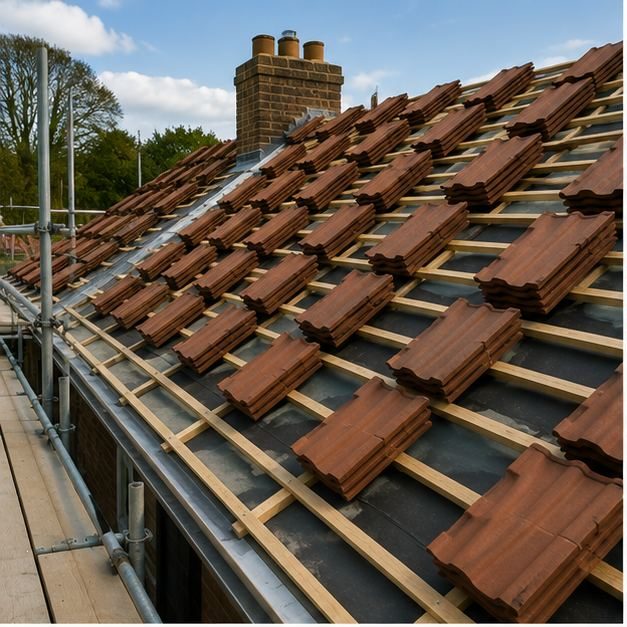
The process is straightforward but relentless once it begins in earnest. Clay and concrete tiles are slightly porous, and over the years they absorb small amounts of moisture, particularly once the surface has started to weather or if a hairline crack has already formed somewhere along the tile's edge. When temperatures drop below freezing overnight, any water trapped inside that porous surface expands as it turns to ice, putting pressure on the material from within the tile itself. This freeze-thaw cycle, repeated over many cold nights across a typical Bristol winter, gradually causes tiles to flake, crack, or break apart entirely, a process roofers often refer to as spalling, and it tends to accelerate once it has started.
Mortar bedding around ridge and hip tiles is particularly vulnerable to the same effect, since traditional lime or cement mortar can hold moisture and sits exposed along the most prominent, weather-facing line of the roof. Once cracks appear in that mortar, water gets in more easily, and the freeze-thaw cycle accelerates from one winter to the next, often quite quickly once the first crack forms. This is a common issue on older Fishponds roofs where the original bedding has not been renewed for some years, and it is often the first visible sign that a roof is starting to struggle with the demands placed on it each winter.
The difficulty with frost damage is that it is often invisible from ground level until a tile fails outright or a leak develops somewhere inside the loft space above the bedrooms. Regular inspection, ideally before winter and again after any particularly hard frost, gives the best chance of catching early signs such as small flakes of tile appearing in the gutter or loose mortar visible around the ridge line from a distance. Where damage is widespread across a roof rather than confined to one or two tiles, replacing the affected sections, or in some cases the whole roof, tends to be more cost-effective over time than repeated patch repairs carried out each spring as new damage appears.
Brunel Roofing Bristol has experience assessing older tiled roofs across Fishponds and can advise honestly on whether frost damage you have noticed is isolated or a sign of wider wear across the whole roof. If you have noticed tile fragments after a cold snap or are simply concerned about how your roof has weathered over the years, a proper inspection is the sensible next step before committing to any repair work or replacement.
Get a Free Quote for New Roof Installations in Fishponds
Every roof is different — the fastest way to get an accurate answer is a quick chat with our team.