
Wherever two roof slopes meet at an angle, rather than at a simple ridge, you get a valley, and valleys carry a disproportionate amount of water compared with the rest of a roof. On the more complex roof shapes found on some of the extended and semi-detached properties around Barton Hill, valleys are often the busiest part of the whole roof during heavy rain, which is exactly why rebuilding them properly during a re-roof matters so much, particularly on houses that have had rear extensions or dormers added over the years, creating extra roof junctions that weren't part of the original design.
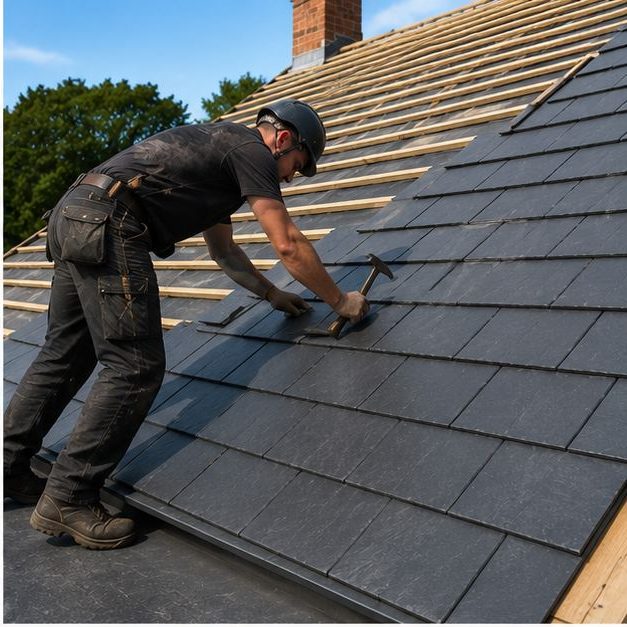
During a full re-roof, the valley isn't simply covered over with new tiles laid on top of the old lining. The existing valley material, whether that's an older lead lining, a mortar-bedded valley, or a valley trough tile system, is stripped out completely along with the surrounding roof covering. This gives a clear view of the timber underneath, so any rot or deterioration around the valley rafter, which is common given how much water passes through this area over the years, can be identified and dealt with before anything new goes in.
A new valley is then formed using a lining suited to the roof, most commonly lead or a purpose-made valley trough system, set at the correct fall so water is channelled away efficiently rather than pooling or backing up under the tiles at the edges. The tiles or slates on either side are then cut and dressed neatly against the valley lining, which takes more time and care than laying a straightforward open area of roof, since a poorly cut edge can let water track sideways under the covering.
Getting a valley wrong, or reusing tired old lead that's cracked or thinning, is one of the more common causes of leaks on older roofs in Barton Hill, precisely because so much water funnels through that one narrow channel. Rebuilding it properly as part of a full re-roof removes that risk and gives the roof a much longer trouble-free life at what is otherwise a vulnerable point.
There's also a choice to make between an open valley, where the lining is left visible between the two roof slopes, and a closed or laced valley, where the tiles or slates are brought together more tightly over the top. Open valleys are generally easier to keep clear of debris and simpler to inspect over time, while closed valleys can suit certain roof styles better visually. Which approach is right depends on the roof pitch, the materials being used, and the look the property calls for, and it's a decision worth discussing properly at the survey stage rather than defaulting to whatever was there before.
If your roof has valleys that have caused problems in the past, or you simply want reassurance they'll be done properly, Brunel Roofing Bristol can talk you through the approach we'll take on your specific roof shape. Get in touch for a survey and quote.
Get a Free Quote for New Roof Installations in Barton Hill
Every roof is different — the fastest way to get an accurate answer is a quick chat with our team.