
Chipping Sodbury's older streets are home to a good number of traditional roofs, from Cotswold stone tiles on the town's historic buildings to clay tiles on Victorian and Edwardian houses nearby. These roofs have a character all their own, but they also need to be cleaned in a very different way to a modern concrete-tiled roof on a newer estate.
Traditional stone and clay tiles are generally more porous and more brittle than modern concrete alternatives, especially once they've weathered for decades. Turning a high-pressure jet washer on them is one of the quickest ways to do real damage: pressure washing can crack tiles, dislodge them from their battens, strip away protective surface layers, and drive water up underneath the tiles where it has no business being.
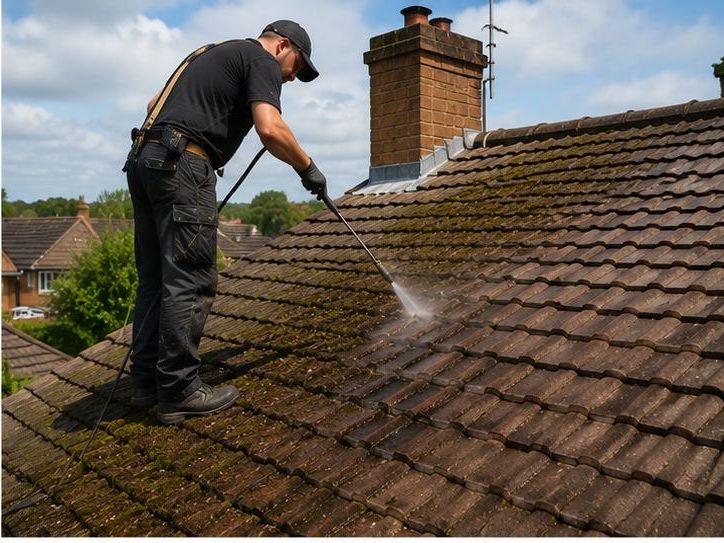
The safer approach, and the one we use on this type of roof, is a gentle soft-wash treatment. This means applying a specialist biocide solution at low pressure, allowing it to work into the moss, algae and lichen at the root rather than simply blasting the surface. Loose debris is cleared carefully by hand where needed, and the treatment is left to continue working over the following weeks as rain gradually washes away the dead growth.
Before any cleaning starts, the roof needs a proper look over. On a traditional Chipping Sodbury roof that might mean checking individual tiles for hairline cracks, inspecting the mortar bedding on the ridge line, and looking at flashing around chimneys and valleys, all of which can be more fragile on an older structure than they first appear.
Working safely at height on a steep traditional pitch also takes the right equipment and experience, which is why this isn't really a DIY job or one to hand to a generic pressure washing service. A fully insured roofing contractor understands how to access and move around an old tiled roof without putting extra stress on tiles that have already had decades of weather to contend with.
It's also worth setting expectations correctly: results with a soft-wash approach aren't always instant. The biocide keeps working after the visit, and it can take a few weeks of weather for the roof to visibly lighten and for dead moss to fully wash away, which is a small trade-off for a method that protects the tiles rather than risking them.
Valleys, hips and the areas around any dormers or roof lights tend to need particular care too, since these are the spots where debris naturally collects and where a careless approach with tools or pressure is most likely to cause a leak. On a traditional roof, taking the time to work these areas by hand rather than rushing them with equipment is usually what separates a job that lasts from one that needs revisiting within a year or two.
Weather also plays a role in scheduling this kind of work well. Soft-wash treatments are generally best applied in reasonably dry, settled conditions, so a planned appointment can sometimes shift by a day or two if heavy rain is forecast, which is a small trade-off for treatment that's actually given the chance to work properly rather than being washed away before it's had time to take effect.
If you have a traditional tiled or stone roof in Chipping Sodbury and you're unsure what condition it's really in under the moss, Brunel Roofing Bristol can carry out an assessment and recommend the right approach for your specific roof, then provide a quote based on what it actually needs.
Get a Free Quote for Roof Cleaning in Chipping Sodbury
Every roof is different — the fastest way to get an accurate answer is a quick chat with our team.