
Replacing a roof in a Redland terrace or paired villa often means the finished job sits directly next to a roof that has not been touched in decades. Getting a neat join in that situation is partly a technical challenge and partly a visual one, since the aim is a boundary that is watertight but does not look like an obvious patch against older, weathered tiles that have softened in colour over many years of Bristol weather and take on a character of their own over time.
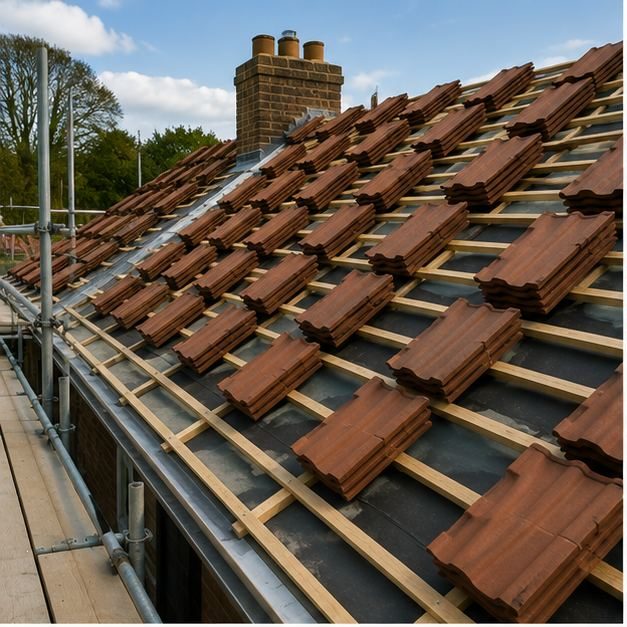
Colour is usually the first thing to consider. Brand new clay or concrete tiles can look noticeably brighter than the aged, weathered tiles on a neighbouring roof that has spent many years under Bristol's weather, so choosing a tile shade that will settle in over time, rather than one that clashes permanently, is worth discussing before ordering materials. Some manufacturers also offer tiles designed to weather more quickly and blend in sooner, which can be a useful option on a street where roofs are viewed as a continuous whole from the pavement and from surrounding upper-floor windows.
Profile and coursing matter just as much as colour. Lining up the new tiles' headlap and gauge as closely as practical with the neighbouring roof, particularly along the shared ridge and verge line, helps the two roofs read as a coherent pair from street level, even where the materials themselves are not identical. A slightly mismatched course line at the join is one of the more noticeable giveaways of rushed work, and it is something we check carefully before tiling begins on a shared boundary, adjusting the setting-out where needed rather than forcing a poor fit.
The physical junction still needs to do its job structurally, with flashing or a mortar fillet dressed properly against the older roof surface so that water is shed correctly regardless of any small differences in height or pitch between the two coverings. A neat appearance should never come at the expense of a weathertight detail underneath it, and on a villa that has been converted into flats, getting this balance right protects the interests of everyone living in the building, not just the roof's immediate owner or the flat directly beneath the affected slope. Taking a photograph of the existing roofline before work starts, and referring back to it when choosing tiles, is a simple step that helps avoid disappointment once the new covering is in place, since what looks like a close match on a sample board in bright daylight does not always read the same way once it is up against the softer, more uneven tones of a genuinely old roof.
If you are re-roofing a property in Redland next to an older, unrenovated roof and want the join to look considered rather than accidental, Brunel Roofing Bristol can advise on tile choice and detailing before work begins, and provide a full quotation for the project that takes the neighbouring roof's appearance into account.
Get a Free Quote for New Roof Installations in Redland
Every roof is different — the fastest way to get an accurate answer is a quick chat with our team.