
A roof valley, formed where two roof slopes meet at an angle, carries far more water than an open expanse of plain tiling because it collects the runoff from both adjoining slopes at once and channels it into a single, narrower path towards the gutter. On Montpelier's varied roofscape, where bay windows, rear outriggers and adjoining roof planes on extended or converted properties are common, valleys are one of the busiest parts of the whole drainage system, even though they can be easy to overlook when simply looking up from street level on a dry day.
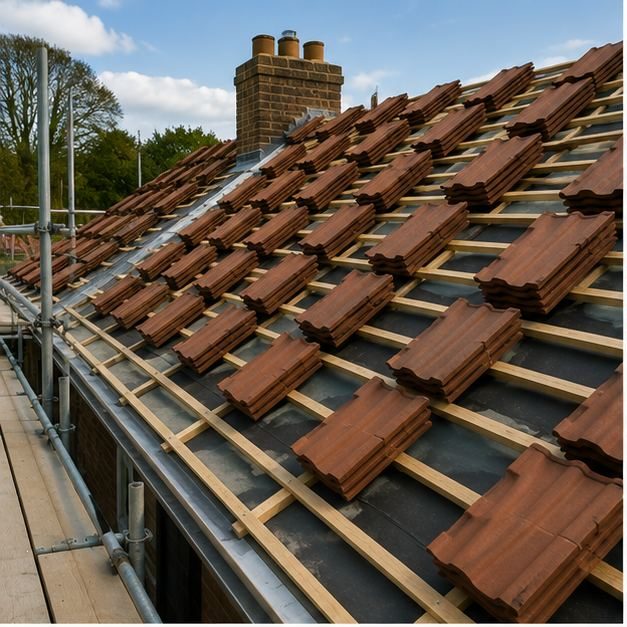
Because a valley concentrates so much flow into a narrow channel, any weakness there tends to show up sooner rather than later, whether that is a cracked or corroded valley liner, tiles cut too short at the edge leaving small gaps, or debris building up where fallen leaves and moss collect in a channel that rarely gets the chance to dry out fully between one spell of rain and the next, particularly through the autumn and winter months. A fault here can allow water into the roof structure well before problems become visible on the main tiled slopes either side of it.
During a new roof installation, valleys are rebuilt rather than reused wholesale, with a new liner or valley tile system installed to suit both the roof pitch and the realistic volume of water it will need to handle in this part of Bristol throughout the year. Tiles on either side are cut and bedded properly against the valley so water is channelled smoothly along its full length rather than catching on rough, uneven or poorly finished edges that slow the flow and encourage the kind of build-up that eventually causes problems.
On a property in Montpelier with more than one roof plane, such as a converted terrace with a rear extension or a loft dormer added to create extra bedroom space, getting the valley right is one of the more technical parts of a re-roof, and it is worth confirming with any installer exactly what valley system they intend to use and why, rather than simply assuming all valleys are essentially interchangeable regardless of the roof they sit on.
Because a valley failure can develop slowly, often as a slow drip during moderate rain long before any dramatic leak appears, it is worth having valleys checked even if the rest of the roof looks to be in reasonable condition. On a property with several roof planes meeting at different angles, a proper inspection from within the loft space can often reveal early signs of trouble at a valley well before anything becomes visible from outside, particularly staining on the underside of the roofing felt directly beneath the channel.
If your property has valleys that need attention as part of a new roof, whether they are already showing signs of wear or you simply want them assessed properly alongside the rest of the roof, Brunel Roofing Bristol can talk through the options available and provide a clear, itemised quote for the work involved.
Get a Free Quote for New Roof Installations in Montpelier
Every roof is different — the fastest way to get an accurate answer is a quick chat with our team.