
A roof tile does not need to be broken to fail. Being on a hillside above the estuary, Portishead sees sustained wind loading that a great many roofs elsewhere in Bristol simply never experience, and understanding how that wind actually interacts with a tiled roof helps explain why older coverings can start losing tiles even when each individual tile still looks perfectly sound.
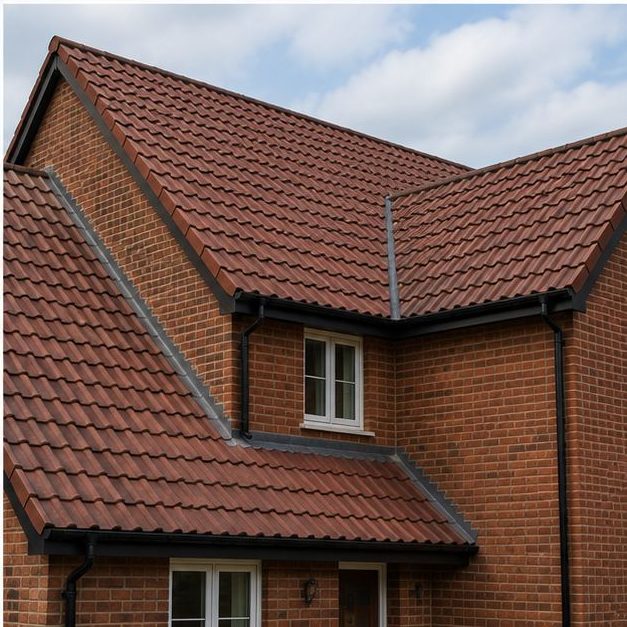
It is a useful thing for homeowners to understand, because it changes what to look for when checking a roof. Rather than searching only for tiles that are visibly cracked or broken, it is worth watching for tiles that sit even slightly proud of their neighbours, edges that have started to curl, or a faint rattle during windy weather, since these are all early indications that the wind has already begun finding its way underneath the covering.
Roof tiles are designed to overlap one another and rely partly on their own weight, partly on nails or clips, and partly on the tightness of that overlap to stay in place. Wind blowing across a roof creates areas of lower pressure above the surface, and if it can find a way underneath a tile edge, even briefly, that pressure difference works to lift the tile rather than simply push against it. On a new roof, tight fixings and a snug overlap resist this. On an ageing roof, small movements build up over years until the wind finally has enough of a gap to exploit.
Nail fatigue is a major factor. Metal fixings that have held tiles in place for decades can corrode or work loose gradually, long before any visible sign appears on the surface. Battens, too, can weaken with age, particularly where they have taken on a small amount of moisture over the years. None of this is obvious from the ground, which is why a roof in Portishead that has coped fine with mild weather can suddenly start shedding tiles once genuinely strong wind arrives.
Roofs are also designed with a particular level of wind exposure in mind, based loosely on how sheltered or open the site is. A property standing on open ground with a clear run of wind coming off the estuary is working under considerably more load than a similar house tucked among taller neighbours a short distance inland, even though both sit within Portishead itself. A roof installed decades ago, before its specific exposure was well understood or before fixing standards improved, can be under-specified for the conditions it now actually faces.
This is one of the reasons a full re-roof addresses the problem more thoroughly than tile-by-tile repairs. Replacing the battens and fixings alongside the tiles themselves removes the weak points that wind exploits, rather than leaving the underlying cause in place while patching the visible symptoms. Brunel Roofing Bristol pays particular attention to fixing specification on exposed Portishead properties for exactly this reason.
If tiles on your roof have started to loosen or lift in windy conditions, it is worth having the fixings checked rather than assuming a few replacement tiles will solve the problem for good. Brunel Roofing Bristol can inspect the roof structure beneath the surface and advise on what is really needed.
Get a Free Quote for New Roof Installations in Portishead
Every roof is different — the fastest way to get an accurate answer is a quick chat with our team.