
Home extensions have become a common sight across Arnos Vale, as homeowners look to add a kitchen-diner, an extra bedroom, or a home office without the upheaval of moving house. Most of these single-storey additions end up with a flat or very low-pitched roof, which makes the choice of covering one of the more important decisions in the whole build.
EPDM rubber membrane has become a popular choice for exactly this kind of structure. It is a flexible, weather-resistant material that can be installed in large sheets, which means an extension roof of typical domestic proportions can often be covered with minimal joints. Fewer joints means fewer places where water could eventually find a way in, which matters a great deal on a roof that will sit largely out of sight and easy to forget about once the extension is finished.
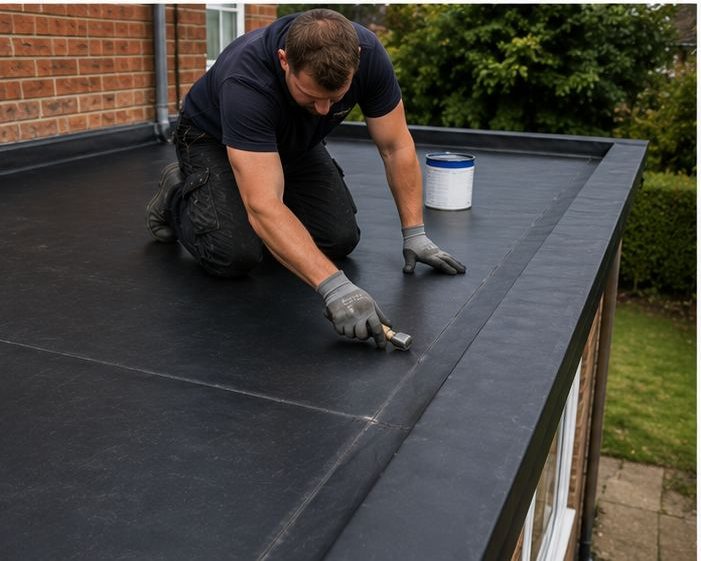
Flexibility is one of EPDM's real practical advantages for extension work. The membrane can be dressed neatly around upstands, roof lights, and the junction where the new roof meets the existing house wall, all areas that tend to be trouble spots on flat roofs generally. A careful installer will pay particular attention to these junctions, since a poorly detailed wall abutment is one of the most common sources of leaks on extension roofs in Arnos Vale and elsewhere.
Weather resistance is another reason EPDM suits this application. UK weather puts flat roofs through a demanding cycle of rain, frost, and summer heat, and a well-installed EPDM system is designed to cope with that range without becoming brittle or losing its watertight seal over time, which is a real concern with some older felt systems.
That said, EPDM's performance on an extension roof depends on more than the membrane itself. The roof deck needs to be sound and properly fixed, the falls need to be set up correctly so water actually drains toward the outlets rather than pooling, and the edge trims need to be fitted with care. A good membrane installed over a poorly built deck will still cause problems eventually, so it is worth thinking about the whole roof build, not just the covering.
For extensions specifically, insulation is also worth planning early. Because the new roof structure is being built from scratch, there is a good opportunity to get insulation levels right underneath the EPDM at the same time, which affects both comfort in the new room and long-term energy costs.
Many Arnos Vale extensions also have to work around existing features such as soil pipes, extractor fan outlets, or a nearby chimney breast, and EPDM handles these penetrations well when they are dressed correctly, keeping the whole roof as a single, continuous waterproof layer rather than a patchwork of separate fixes.
It is also sensible to plan the roof covering alongside the extension design rather than as an afterthought once the structure is up. Discussing the roof shape, the position of any rooflights, and how the covering will meet the existing house early on gives the installer the best chance to detail every junction properly from the outset, rather than working around decisions that have already been fixed by the build.
If you are planning an extension in Arnos Vale and weighing up roofing options, it is worth getting a proper assessment of your specific roof shape, size, and junctions before deciding. Brunel Roofing Bristol can talk through whether EPDM is the right fit for your project and provide a quotation based on your actual plans.
Get a Free Quote for EPDM Roofing in Arnos Vale
Every roof is different — the fastest way to get an accurate answer is a quick chat with our team.