
Clifton's period homes are known for their tall, often ornate chimney stacks, a feature that adds real character to the area's rooftops. Look closely at many of them, though, and you'll often find moss growing thickest right at the base, where the chimney meets the roofline. It's a pattern that repeats across the area regardless of how well a particular property has otherwise been maintained, simply because of how these chimney junctions are built and where they sit relative to the sun and prevailing weather.
That's not a coincidence. Chimney bases tend to stay shaded and damp for longer than open roof slopes, and the junction between chimney and roof, where flashing is fitted to keep water out, creates exactly the kind of sheltered, moisture-retaining spot that moss and lichen favour.
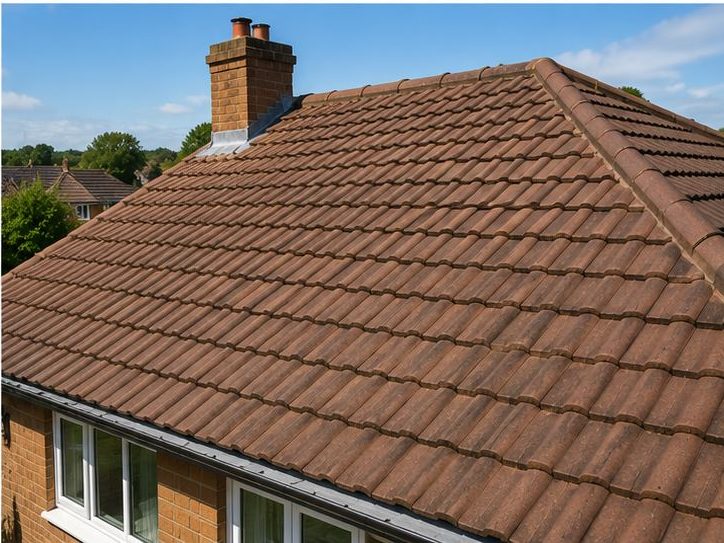
Flashing, usually lead on older Clifton properties, is what keeps water from getting in at that awkward joint between a vertical chimney stack and a sloped roof. Over time it can crack, lift away from the masonry, or corrode, and once that happens, moisture that would normally be shed away from the roof can start finding its way underneath instead.
This is exactly why chimney-base moss is worth paying attention to rather than dismissing as purely cosmetic. Carefully removing moss from around a chimney can reveal cracked or lifted flashing, gaps in the mortar fillet that seals the joint, or other early warning signs that wouldn't have been visible with the growth still in place.
Left unnoticed, a failing chimney flashing can eventually lead to damp patches appearing on a chimney breast inside the house, or moisture tracking into the loft space nearby, problems that are considerably more disruptive and costly to put right than the original moss ever was.
The reassuring part is that catching this early, as part of a proper roof moss removal and inspection, generally means the fix is straightforward: reseating or renewing a section of flashing, or repointing a mortar fillet, well before any water has actually made its way inside.
Many Clifton terraces also share chimney stacks or have stacks positioned close to a party wall, which means a flashing problem on one section can occasionally have implications for a neighbouring property too. It's another reason to have chimney-area moss looked at by someone who understands how these older roof junctions are put together, rather than assuming it's a purely cosmetic patch of green to be scrubbed off and forgotten.
Signs worth watching for inside the property, alongside the moss outside, include musty smells near a chimney breast, faint discolouration on ceilings close to a chimney, or a slightly damp feel to a loft space in that area after heavy rain. None of these are conclusive on their own, but taken together with visible moss around the chimney base outside, they're a reasonable prompt to get things checked before a small issue becomes a more involved one.
If you've noticed moss gathering around a chimney on your Clifton property, it's worth having it looked at properly rather than left. Brunel Roofing Bristol can assess the chimney base and flashing as part of a full roof inspection and let you know if there's anything that needs attention.
Get a Free Quote for Roof Cleaning in Clifton
Every roof is different — the fastest way to get an accurate answer is a quick chat with our team.