
Roofers often talk about a roof in terms of "squares", a trade measurement equal to one hundred square feet of roof covering, rather than the square metres most homeowners are used to. For anyone in Lawrence Hill trying to understand a quote or ask sensible questions about their new roof, it helps to know how this figure is actually worked out, and why it is rarely the same as the footprint of the house underneath. The term dates back a long way in the trade, but it is still used routinely today when ordering materials or comparing the scale of different jobs.
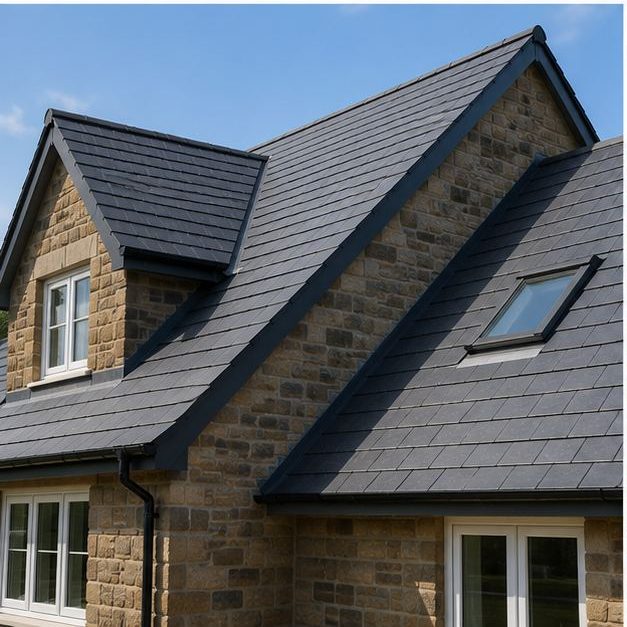
The starting point is the roof's pitch, which is the angle at which it slopes. A steeper pitch means more actual roof surface for the same footprint, because the covering is stretched over a longer diagonal distance rather than lying flat. Many properties in Lawrence Hill have the fairly steep, traditional pitches typical of Victorian terraced construction, which means the true roof area is noticeably larger than it might appear when simply looking up from the pavement.
To calculate the area accurately, a roofer measures the horizontal span and the vertical rise of each roof plane, then uses these figures to establish the true sloped distance. This is repeated for every distinct section of the roof, including any smaller planes over bay windows, extensions or dormers, before being converted into squares or square metres for ordering purposes. It is a straightforward calculation in principle, but it depends entirely on accurate on-site measurement rather than assumption, and even a small error in the recorded pitch can throw the final area out by a meaningful margin once it is applied across an entire roof.
Understanding this process helps homeowners in Lawrence Hill make sense of why quotes vary between properties that look similar from the outside, and why a roofer needs to visit in person rather than pricing purely from a photograph or description. Pitch, complexity and true surface area all feed into the final material list, and small differences in any of these can noticeably change the quantities required.
Pitch also affects which materials can be used at all. Very shallow pitches, sometimes found on rear extensions or converted flat-roof sections in Lawrence Hill, can rule out certain tile profiles altogether, since most concrete and clay tiles need a minimum pitch to shed water reliably. On steeper traditional terraced roofs, a wider range of tiles and slates is usually suitable, but the trade-off is that a larger true surface area, and therefore more material, is needed to cover the same footprint compared with a shallower roof of the same size.
At Brunel Roofing Bristol, we explain these figures clearly as part of every quote, so homeowners in Lawrence Hill understand exactly how the numbers behind their new roof have been reached. If you would like a straightforward, well-explained assessment of your roof's area and pitch, get in touch and we can arrange a visit.
Get a Free Quote for New Roof Installations in Lawrence Hill
Every roof is different — the fastest way to get an accurate answer is a quick chat with our team.