
Chimneys are one of the most vulnerable points on any pitched roof, and on the period properties common throughout Montpelier they tend to accumulate moss faster than most other parts of the roof. That combination of a vulnerable junction and heavy growth means chimneys are worth paying particular attention to whenever a roof is being cleaned or assessed, since a problem here can affect far more of the roof than its size alone would suggest.
The reason moss favours chimney areas is straightforward. The junction between a chimney stack and the roof slope creates a natural collection point for debris, and the surrounding brickwork often casts a degree of shade. Add in the fact that lead flashing and mortar fillets around chimneys can hold moisture longer than the open roof plane, and you have close to ideal conditions for moss and algae to establish themselves and spread outward from there across the surrounding tiles or slates.
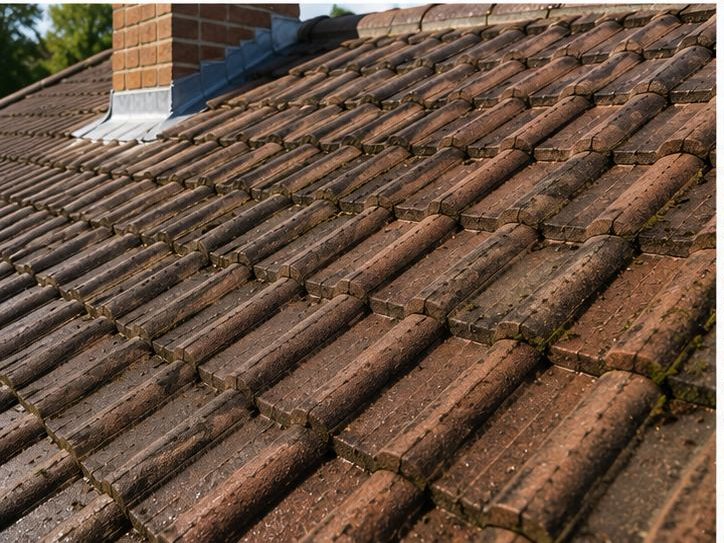
The trouble is that a thick mat of moss around a chimney can conceal exactly the kind of problems that matter most on a roof. Cracked or perished pointing between the chimney and the roof tiles, lead flashing that has lifted or split, or mortar fillets that have started to fail can all sit hidden beneath moss growth for a long time without any visible sign at ground level, even to a fairly observant homeowner.
This matters because chimney flashing and mortar are one of the most common sources of roof leaks. Once flashing fails or mortar cracks, rainwater can track down inside the chimney breast or along roof timbers, sometimes causing damp patches well away from the chimney itself before the source is identified, which can make the original cause surprisingly hard to trace without a proper roof-level inspection to work back from.
On Montpelier's older properties, where original lead flashing and lime mortar are still common, this is a particularly relevant concern. These materials age differently to modern equivalents, and years of moss growth sitting directly against them can accelerate wear that might otherwise have gone unnoticed for much longer, quietly shortening their working life.
Careful moss removal around a chimney, using a gentle soft-wash approach rather than aggressive pressure washing, allows this area to be cleared without disturbing already vulnerable flashing or mortar. Just as importantly, it gives us the chance to properly inspect the chimney junction once the growth is gone and flag anything that needs attention while it is still a straightforward repair.
Because chimneys sit at a genuine weak point in the roof structure, we treat them as a priority area during any Montpelier clean rather than simply working across the whole roof at the same pace, since the consequences of missed damage here tend to be more serious than elsewhere.
It is also worth mentioning that chimneys no longer connected to an active fireplace still need their flashing and mortar to perform properly, since they remain part of the roof's overall weatherproofing regardless of whether they are still used for their original purpose. A disused chimney is not a lower priority when it comes to checking for moss-related damage.
If your Montpelier home has visible moss building up around the chimney, it is worth having it looked at rather than left. Contact Brunel Roofing Bristol for an assessment, and we will let you know exactly what condition the chimney and surrounding roof are really in.
Get a Free Quote for Roof Cleaning in Montpelier
Every roof is different — the fastest way to get an accurate answer is a quick chat with our team.