
Green staining creeping across a roof is one of the most common issues we see on properties around Bishopsworth, and it is worth understanding what is actually causing it before deciding what, if anything, to do about it. That green film is usually algae rather than moss, though the two often appear together and thrive in similar conditions.
Algae needs moisture and, unlike moss, it does not need much soil or debris to get started. A roof slope that stays damp for long periods, whether from shade, poor drainage, or simply the direction it faces, gives algae exactly the environment it needs to establish itself and spread across the tiles over time.
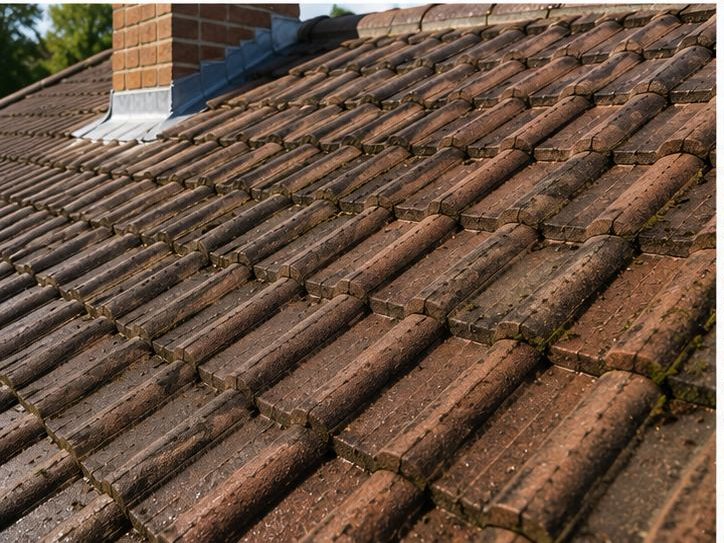
Shade is the single biggest factor we see repeatedly. Roofs in Bishopsworth that sit beneath mature trees, or that are overshadowed by neighbouring buildings, tend to develop algae and moss far more readily than roofs that get plenty of open sun. Without direct sunlight to dry the surface out between wet spells, a north-facing or heavily shaded slope can stay damp for days after rain, which is ideal growing conditions for both algae and moss.
Roof orientation plays a similar role even without trees involved. A north-facing pitch naturally receives less direct sun through the day than a south-facing one, so it dries more slowly and is more prone to green staining over the years, even on a roof that is otherwise in excellent condition.
The type of roofing material also has an influence. Concrete tiles, in particular, have a slightly porous surface that gives algae spores something to grip onto, and this texture increases with age as the surface weathers. Roofs with a rougher or more textured finish tend to accumulate more growth over time than smoother materials.
None of this means algae is inevitable or that there is nothing to be done. Understanding why a particular roof in Bishopsworth is affected helps us recommend the right kind of clean and, just as importantly, sensible steps to slow regrowth afterwards, such as keeping nearby branches trimmed back where practical.
Local weather patterns play their part too. Bristol's generally damp, mild climate means roofs rarely get long dry spells strung together, which gives algae repeated opportunities to establish and spread rather than drying out and dying back naturally. Combined with Bishopsworth's mix of tree-lined roads and varied roof orientations, this is simply the kind of environment where green staining is a common, ongoing issue for a great many properties rather than a sign that anything has been done wrong.
It is also worth noting that algae rarely stays confined to one small area for long. Once established, it tends to spread gradually outward across a slope over successive wet seasons, which is why a light dusting of green in one corner of a Bishopsworth roof today can, left unchecked, become a much more extensive covering within a few years.
If green algae has taken hold on your roof and you would like to know what is driving it and how best to deal with it, we are happy to take a look and give you an honest, straightforward assessment.
Get a Free Quote for Roof Cleaning in Bishopsworth
Every roof is different — the fastest way to get an accurate answer is a quick chat with our team.