
Brentry is home to a good mix of mature trees, established gardens and roofs of varying ages, all of which combine to create ideal conditions for heavy moss growth on a fair number of properties in the area. Understanding what drives it helps explain why some roofs in Brentry seem to attract far more moss than others nearby. Recognising these factors early makes it much easier to plan sensible, timely maintenance rather than reacting only once growth has become severe.
Shade is the single biggest contributor. Roof slopes that sit under or near mature trees stay damp for much longer after rain than open, sun-exposed slopes, simply because sunlight cannot reach them to dry the surface out. Brentry's leafier streets, with established trees overhanging gardens and roof lines in places, create exactly this kind of environment on parts of many roofs.
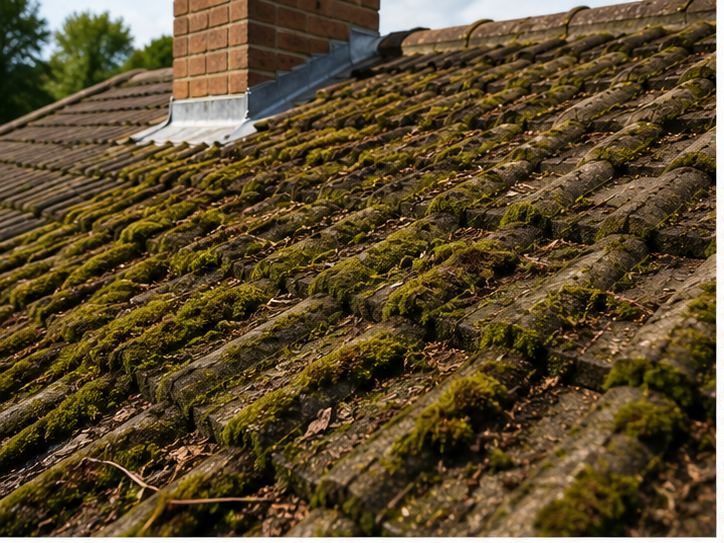
Falling organic debris compounds the problem. Leaves, twigs, seeds and general tree litter that land on a roof and collect in valleys or along the base of the tiles provide both moisture retention and a food source for moss spores to establish themselves, particularly where they are not cleared away regularly.
Roof orientation matters just as much, regardless of nearby trees. A north-facing slope naturally receives less direct sunlight through the day than a south-facing one, so it dries more slowly after rain and is more prone to sustained dampness, which over months and years allows moss to take hold and spread.
The type and age of the roofing material also plays a part. Older concrete tiles, common on many of Brentry's properties, tend to have a slightly rougher, more porous surface as their protective coating weathers over the decades, giving moss spores something more to grip onto than a newer, smoother tile would offer.
Heavy moss does not just sit there looking unsightly, either. As it thickens, it holds moisture directly against the tile surface for extended periods, which over time can affect the tile itself and, if left long enough, contribute to blocked gutters as pieces break away and wash down during rain.
It is also worth noting that heavy moss growth rarely appears suddenly. It builds gradually over several years, starting as small patches in the most vulnerable spots, such as a shaded valley or a north-facing slope, before gradually spreading if left unaddressed. This slow build-up is part of why it can catch homeowners in Brentry by surprise, since a roof that looked reasonably clean a few years ago can end up heavily covered without any single dramatic change, simply through the steady accumulation of the same underlying conditions year after year.
Wind direction can play a small but real part too. Roof slopes that face the prevailing weather often see rain driven onto them more forcefully and more often than sheltered slopes, which can add to the general moisture load a Brentry roof experiences over the course of a typical year.
If moss has built up significantly on your roof in Brentry and you are wondering what is behind it and what your options are, we are happy to come and take a look and give you a clear, honest assessment.
Get a Free Quote for Roof Cleaning in Brentry
Every roof is different — the fastest way to get an accurate answer is a quick chat with our team.