
Ponding water is one of the more common problems flagged on flat roof inspections across Bishopston, and it is worth understanding what actually causes it, because standing water is never just a cosmetic issue, it puts sustained pressure on a roof covering that can shorten its working life considerably.
Flat roofs are not actually flat by design, they are built with a slight fall, usually just a few degrees, intended to guide rainwater steadily toward outlets or gutters rather than letting it sit on the surface. When that fall is compromised in some way, water no longer drains as it should, and pooling is the direct result.
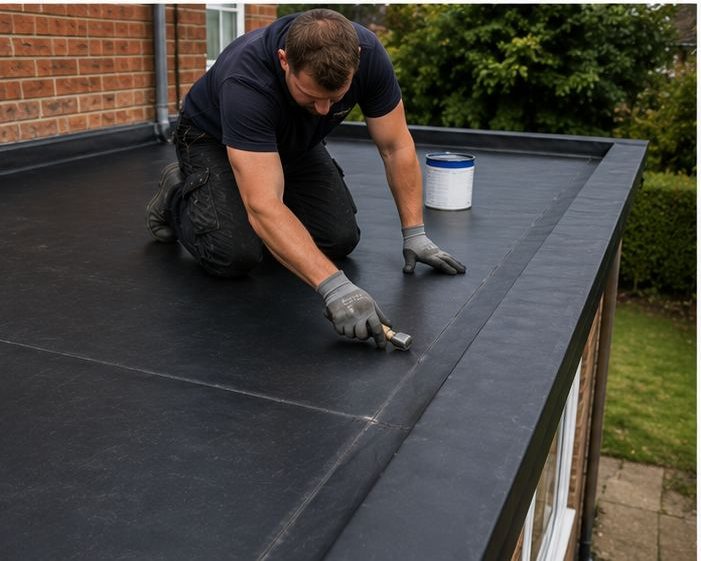
One common cause on Bishopston's older properties is a roof deck that has sagged slightly over time. Timber decking can settle or deflect over the decades, particularly if it was never especially substantial to begin with or if it has been carrying the weight of ballast, previous re-covers, or simply years of exposure. Even a small dip in the deck creates a low point where water will naturally collect after every rainfall.
Insulation that has settled or compressed unevenly beneath the covering can have a similar effect, creating a shallow depression in the roof surface even where the underlying deck itself is sound. This is more common on older roof buildups that were not designed with tapered insulation to help direct water flow, something modern installations often account for from the outset.
Blocked or poorly positioned outlets are another frequent culprit, and one of the more easily fixable ones. Leaves, moss, and general debris can accumulate around drainage points, particularly on Bishopston roofs near mature trees, gradually restricting the flow of water until it starts backing up and pooling nearby rather than draining away as intended.
Occasionally the cause is simply an original design or installation issue, where the roof's fall was never quite sufficient in the first place, perhaps as a result of an older extension built without the benefit of a properly engineered drainage plan. In these cases, addressing the ponding may require adjustments to the roof buildup itself during a re-cover, rather than a quick fix at surface level.
Ponding water matters because it accelerates wear on the covering in that exact spot, increasing the risk of a leak developing there well before the rest of the roof shows any comparable signs of ageing. It is also simply extra, unnecessary weight sitting on the roof structure for longer than it needs to.
It is worth checking for ponding fairly soon after a spell of rain if you are able to see the roof from a window or from ground level, since this gives the clearest picture of how the roof is actually draining under real conditions rather than relying on assumptions about how it should be performing.
If you have noticed standing water lingering on a flat roof in Bishopston for more than a day or so after rain, it is worth having the cause properly identified rather than ignoring it. Brunel Roofing Bristol can assess the roof, establish what is behind the pooling, and advise on the right fix, whether that is a drainage correction or a fuller re-cover with EPDM.
Get a Free Quote for EPDM Roofing in Bishopston
Every roof is different — the fastest way to get an accurate answer is a quick chat with our team.