
Water damage to a roof deck is one of the more concerning discoveries a homeowner in St Pauls can face, particularly if it's only found once a roofer has stripped back the existing covering. It's worth understanding what this actually means for a property and how it's typically resolved, since it's a more common finding than many people expect on older flat roofs.
The roof deck — usually timber boarding or plywood — is the structural surface that the waterproof membrane sits on top of. When it's exposed to moisture over an extended period, typically through a failed joint, cracked felt, or a poorly sealed detail somewhere on the roof, the timber can begin to soften, rot, or delaminate, even while the roof above still looks reasonably intact from a distance.
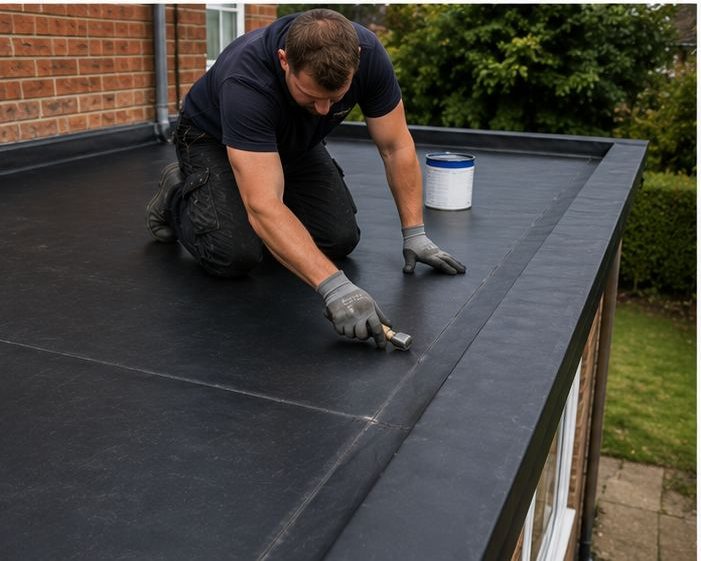
The pattern of the damage can also tell a roofer something useful about how long the problem has been developing. A small, localised soft patch often points to a relatively recent, contained leak, while a wider area of affected decking, or damage that extends towards supporting joists, generally suggests water has been getting in for a considerably longer period.
In many St Pauls properties, particularly terraced houses with rear extension roofs that have been patched or re-covered informally over the years, this kind of hidden deck damage isn't unusual. It often isn't apparent until the old covering is lifted, which is one of the key reasons a proper strip-back and inspection matters more than a quick visual assessment from ground level.
Once damage is identified, the extent determines what's needed. A small area of softened timber around an isolated leak can usually be cut out and replaced with new decking that matches the surrounding structure, allowing work to continue with only a modest addition to the project's scope and cost.
More extensive damage — for instance where water has been tracking across a wider section of the roof, or where supporting timbers beneath the decking have also been affected — requires more substantial repair before any new membrane can go down. This takes more time and adds more cost, but it's a necessary step, since installing EPDM over compromised decking would only conceal a structural problem rather than resolve it.
It's understandably frustrating to discover unexpected decking repairs partway through a roofing project, but this is exactly why a reputable roofer inspects the deck properly before finalising the scope of work, and why quotations should always allow for this possibility being confirmed once the old covering is removed.
It's worth remembering that the visible signs inside a property — a damp patch on a ceiling, a slightly sagging section of plasterboard, or a musty smell in a room below the roof — are usually only the tip of the problem. By the time water damage is noticeable from inside, it's often been affecting the deck above for some time, which is exactly why prompt investigation matters once any of these signs appear.
If you suspect water damage to a flat roof deck on your St Pauls property — perhaps from a persistent leak, staining on a ceiling, or a roof that feels soft underfoot — it's worth having it assessed properly rather than waiting. Brunel Roofing Bristol will inspect the deck honestly, explain exactly what repairs are needed, and install a new EPDM membrane on a solid, dependable base.
Get a Free Quote for EPDM Roofing in St Pauls
Every roof is different — the fastest way to get an accurate answer is a quick chat with our team.