
When Keynsham homeowners start researching flat roof options, three materials tend to come up repeatedly: EPDM rubber, GRP fibreglass, and traditional felt. Each has its own characteristics, and understanding the genuine differences between them makes it much easier to have an informed conversation about which is right for a particular roof.
Felt roofing is the oldest and most familiar of the three, typically applied in overlapping layers or strips, often bonded using heat or adhesive. It has been used for decades and remains a relatively low-cost option, but it does generally have a shorter working life than the alternatives, often needing replacement within around 10 to 15 years, and its multiple seams and layers can become vulnerable points as the material ages and weathers.
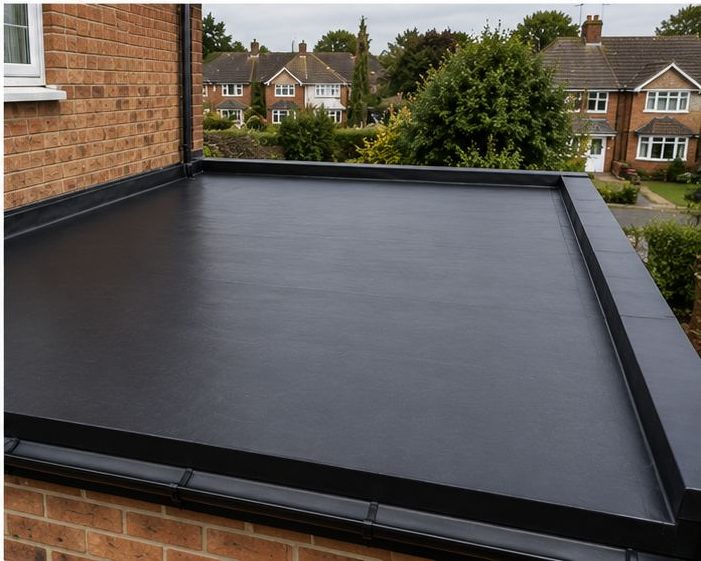
GRP, or glass-reinforced plastic, sometimes referred to as fibreglass roofing, is applied as a liquid resin over a fibreglass matting that then cures to form a rigid, seamless surface. It offers a genuinely durable, hard-wearing finish and is popular for roofs that will see foot traffic, such as roof terraces or balconies, because of that rigidity. However, GRP installation is weather-dependent, since the resin needs the right conditions to cure properly, and because the finished roof is rigid rather than flexible, any significant movement in the building beneath it can eventually lead to cracking, which then needs specialist repair.
EPDM rubber, by contrast, is a pre-manufactured, flexible membrane that is rolled out and bonded to the roof deck rather than applied as a liquid. Because it comes in large sheets, many Keynsham roofs can be covered with very few seams or, on smaller roofs, none at all, which reduces the number of potential weak points compared with the layered nature of felt. Its flexibility also means it can accommodate a degree of building movement without cracking, which is a genuine advantage over the rigidity of GRP on structures that are likely to move or settle over time.
In terms of typical longevity, EPDM generally compares favourably with both alternatives. It is commonly guaranteed by manufacturers for 20 years or more, meaningfully longer than the typical working life of felt, and while GRP can also be long-lasting when installed and maintained well, its rigid nature makes it somewhat more susceptible to cracking over time on roofs that experience movement, something EPDM's flexibility is specifically well suited to handling.
Installation conditions are another practical difference worth knowing. GRP requires dry weather to cure properly, which can limit scheduling flexibility, whereas EPDM's bonded-membrane installation is generally less weather-sensitive, making it a more straightforward option to schedule reliably for a Keynsham project.
None of this means one material is universally best for every situation; a roof with heavy foot traffic might still suit GRP's rigid surface well, while a roof over a garage or extension with typical usage will often suit EPDM's flexibility and reduced seam count. The right choice comes down to the specific roof, its structure, and how it will be used.
If you are weighing up EPDM, GRP or felt for a flat roof in Keynsham, Brunel Roofing Bristol can talk through the genuine pros and cons for your specific roof and recommend the option that best suits your property and budget.
Get a Free Quote for EPDM Roofing in Keynsham
Every roof is different — the fastest way to get an accurate answer is a quick chat with our team.