
Once tiles or slates come off an older Greenbank roof, a lot becomes visible that simply can't be judged accurately from ground level or even from inside the loft beforehand. This is often the stage of a re-roof where the real condition of a property's roof structure is properly understood for the first time in years, and it's worth knowing a little about what's actually being checked if you're considering having your own roof looked at. Understanding this stage can also help explain why a quote sometimes changes once work has actually started and the roof has been opened up.
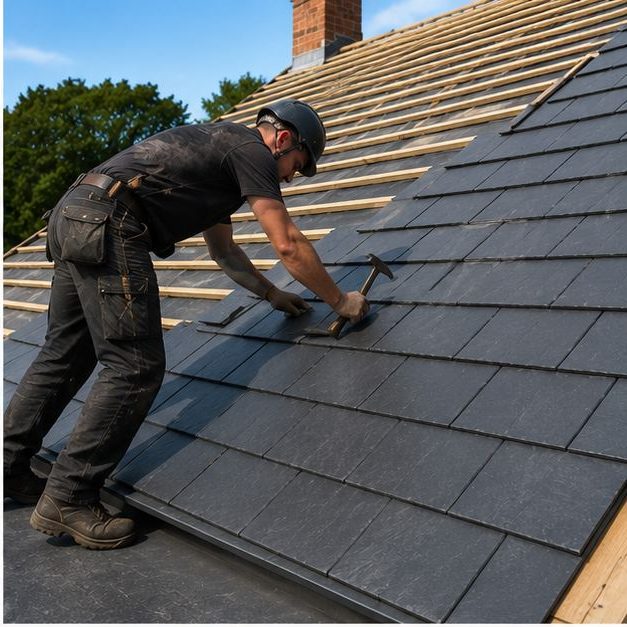
The first thing a roofer will check once the covering is off is the condition of the battens, the horizontal timbers that the tiles or slates are fixed to across the whole roof. On older Greenbank roofs these can be original to the property and, depending on age and past exposure to damp, may be split, soft, or no longer holding fixings securely enough to be relied on. Battens that look perfectly fine from a distance, or even from inside a loft, can turn out to be significantly weakened once the covering that was hiding them is finally removed. Where battens have failed, a roofer will usually recommend replacing them entirely rather than trying to reinforce them in place, since a new roof covering needs a genuinely solid base to be fixed to.
Underneath the battens sits the roofing membrane, or in some older properties sometimes just bare sarking boards with no membrane fitted at all. This layer is central to how well a roof keeps water out over time, and it's common on Greenbank roofs of a certain age to find it perished, torn, or entirely missing in places where previous repair work has disturbed it without being properly reinstated afterwards. A roofer will also examine the rafters themselves closely for signs of rot, staining from long-term leaks, or any movement that might affect how the new roof needs to be fitted and detailed.
It's also common to find evidence of past repair work that was never visible from outside the property, such as tiles that were simply nailed down rather than properly hung on battens, or sections where mismatched materials were used to fill an awkward gap years ago. This kind of detail helps explain any recurring issues the property may have had reported over the years, and it informs how the new roof should be specified to avoid quietly repeating the same weaknesses further down the line.
If you're curious what a proper inspection would find under the tiles of your Greenbank roof, Brunel Roofing Bristol can carry out a thorough assessment and talk you through exactly what's found in plain terms, along with a free quote for putting right anything that genuinely needs it.
Get a Free Quote for New Roof Installations in Greenbank
Every roof is different — the fastest way to get an accurate answer is a quick chat with our team.