
Westbury-on-Trym is known for its mature trees, generous established gardens and a good number of well-established, older properties, and that particular combination happens to create close to ideal conditions for roof moss to take hold and spread over time.
Moss needs moisture, shade and a surface it can cling onto, and established residential areas like this one tend to offer all three in generous supply. Large, mature trees that have had many decades to grow provide exactly the kind of overhanging shade that keeps a roof slope damp for far longer after rain than it would otherwise be, which is very often the starting point for a persistent moss problem.
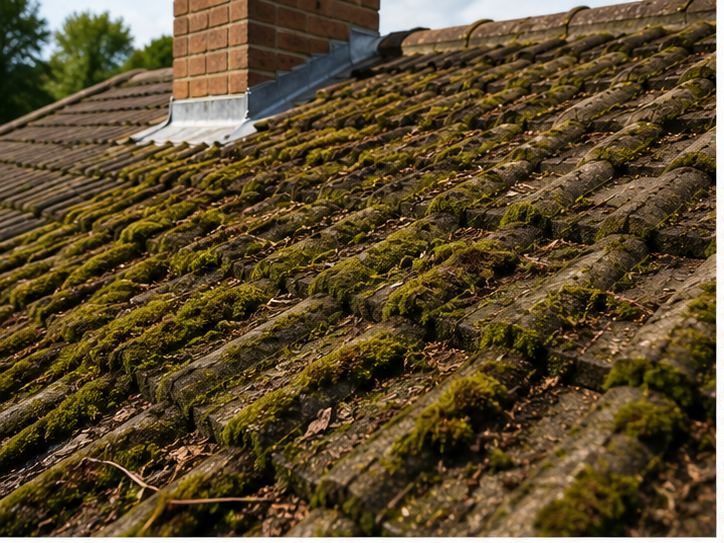
The age of the housing stock plays a significant part too. Many roofs across Westbury-on-Trym were laid with older concrete or clay tiles that have a slightly more textured, porous surface than modern manufactured materials. That texture gives moss spores something to grip onto far more easily than a smoother, newer tile ever would, which is one of the main reasons moss often seems more persistent and widespread on longstanding properties than on recently built homes nearby.
Falling leaves and general organic debris from those same mature trees add another layer to the problem throughout autumn and into winter. They settle in roof valleys and against ridge lines, retaining moisture and steadily feeding the moss and algae that establish themselves there, particularly on north-facing pitches that get very little direct sun through the course of the day.
Once moss gets going on a particular slope, it tends to be self-reinforcing rather than staying contained to one small patch. It holds onto water rather like a sponge, keeping the tile surface beneath it noticeably damper than the surrounding area, which in turn helps it spread further across the roof over successive seasons if the growth isn't dealt with in reasonable time.
None of this means an older Westbury-on-Trym property is somehow destined to have a moss-covered roof forever, it simply means these particular roofs benefit from a bit more regular attention than a newer build on an open, sunny plot might realistically need. Recognising why the growth is happening in the first place is the first genuine step to dealing with it properly, rather than just chipping away at the visible surface every so often.
A gentle soft-wash approach, rather than an aggressive pressure clean, is particularly important on these older tiled roofs, since the tiles themselves can be considerably more brittle after decades of weathering, frost and general wear than most homeowners realise.
It's also worth having the roof looked at by someone who understands roofing rather than just cleaning, since spotting early signs of tile deterioration alongside the moss itself can save a good deal of expense further down the line. None of this is unusual for the area, and it's simply a reflection of how attractive, leafy and well-established Westbury-on-Trym's streets genuinely are, which is part of what makes the area desirable in the first place. It's simply worth factoring the roof into the same ongoing upkeep as the garden and the rest of the exterior, rather than treating it as something that never needs attention.
If you'd like a proper look at why moss keeps returning on your roof in Westbury-on-Trym, get in touch with Brunel Roofing Bristol and we can talk you through exactly what we find and what we'd recommend.
Get a Free Quote for Roof Cleaning in Westbury-on-Trym
Every roof is different — the fastest way to get an accurate answer is a quick chat with our team.