
Walk along many of the older terraced streets in Greenbank and you will quickly spot roofs with a soft green or dark tint spreading across the tiles, particularly on the north-facing slopes. This is moss, and on established housing stock like much of Greenbank's it tends to appear more readily than on newer builds because of the age of the roof covering, the tighter spacing between properties, and the amount of mature tree cover found along many of the surrounding streets and back gardens.
Moss needs damp, shade and a rough surface to establish itself, and Greenbank's terraces provide all three. Tightly packed rows of houses cast long shadows across each other's roof slopes for large parts of the day, which slows down drying after rain. Older clay and concrete tiles also weather over the decades, developing a slightly porous, textured surface that gives moss spores something to grip onto far more easily than a smooth, newly fitted tile would.
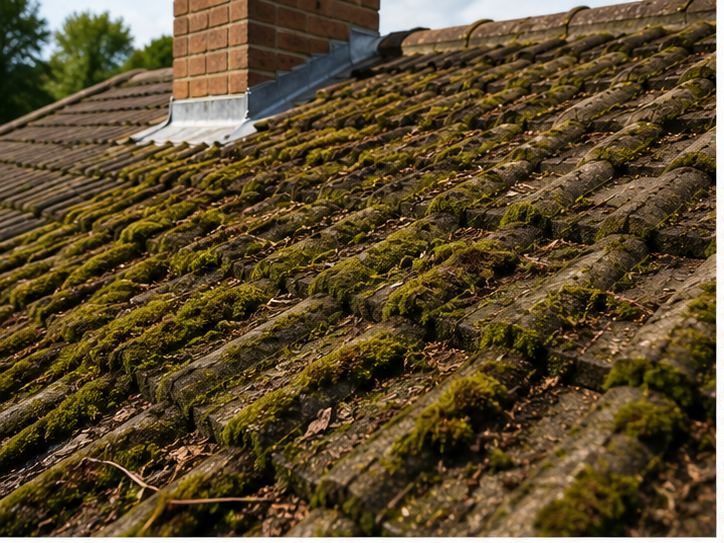
Overhanging trees add another layer to the problem. Falling leaves, seeds and general organic debris collect in the gaps between tiles and around valleys and chimneys, breaking down into a fine organic matter that acts almost like compost. Combined with Bristol's regularly damp weather, this creates ideal growing conditions, and once a colony of moss is established it spreads outward season by season if left untreated.
It is worth saying that moss on a roof is not automatically a sign of a serious problem. Plenty of structurally sound Greenbank roofs carry a moss covering simply because of their orientation and surroundings. The concern is less about the moss itself and more about what it does over time: trapping moisture against the tile surface, working into joints and laps, and eventually lifting material that then finds its way into the guttering below.
Because every roof is different, the right response depends on how established the growth is, how the roof is constructed, and its general condition. A heavily colonised roof that has not been touched in many years needs a different approach to one with a light seasonal dusting of green, which is why an on-site assessment matters more than a generic answer.
It also helps to understand that moss growth is rarely uniform even on a single Greenbank roof. Chimneys, dormer windows and roof valleys create their own micro-climates of extra shade and slower drying, so growth often clusters around these features first before spreading into the flatter, more exposed areas of tile. Homeowners sometimes notice moss thickening around a chimney stack years before the rest of the roof shows any real change, which is a useful early indicator of where a roof is beginning to hold moisture longer than it should.
If you have noticed moss building up on your roof and are not sure whether it needs attention yet, Brunel Roofing Bristol is happy to take a look and give you an honest, no-obligation view on the condition of your Greenbank roof and what, if anything, should be done next.
Get a Free Quote for Roof Cleaning in Greenbank
Every roof is different — the fastest way to get an accurate answer is a quick chat with our team.