
Easton is home to a lot of older housing stock, particularly Victorian terraces close to the city centre, and roofs of this age are far more prone to heavy moss growth than many newer builds elsewhere in Bristol. There are some clear reasons behind that pattern. Walking down some of Easton's older streets, it's noticeable how much more established the moss growth tends to be compared with newer developments nearby, and that difference comes down to a handful of fairly consistent, explainable factors.
Older roof coverings, especially slate and early clay tile, tend to have a more textured, porous surface than modern concrete tiles. That texture gives moss spores something to grip onto and establish a foothold in, whereas a smoother, newer tile surface tends to shed spores and debris more easily before they can take hold.
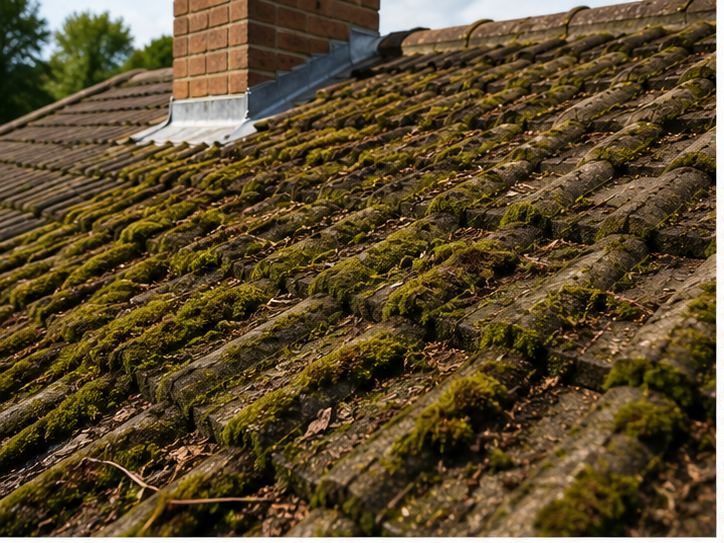
Terraced streets in Easton also mean many roofs sit close together, with narrow gaps between properties that can limit airflow and sunlight reaching certain slopes, particularly north-facing pitches. Reduced airflow and sun exposure keeps a roof damp for longer after rain, which is exactly the environment moss needs to spread.
Age itself plays a part beyond just material. Decades of general weathering mean mortar joints, ridge lines and flashing on many Easton roofs have naturally worn down over the years, creating small ledges, gaps and rough edges where moss and organic debris can gather rather than simply washing off.
None of this means an older Easton roof is automatically in poor condition, plenty are structurally sound and simply need a periodic clean to manage the growth that naturally builds up over time given the local housing and climate. Heavy moss is more a sign of the roof's age and setting than necessarily a sign of neglect.
That said, once moss becomes established it doesn't stay passive. It holds moisture against the tile or slate surface, and over enough time that sustained dampness can contribute to faster wear of mortar and fixings than would otherwise occur, which is why it's worth addressing rather than leaving indefinitely.
Bristol's generally mild, damp climate doesn't help matters either, providing fairly consistent conditions for moss to keep growing across much of the year rather than dying back significantly in a dry spell. Combined with Easton's density of older terraced roofs sitting close together, it's a fairly reliable recipe for moss to establish itself readily and keep coming back if a roof is left unattended for long stretches.
This is one of the reasons periodic maintenance tends to work better on Easton's older roofs than an occasional deep clean whenever the growth becomes hard to ignore. Staying on top of it with a soft-wash treatment every so often, rather than leaving years of build-up to deal with in one go, generally keeps both the appearance and the underlying condition of the roof in better shape over time.
If your Easton property has an older roof that's developed heavier moss growth than you'd like, Brunel Roofing Bristol can assess it and recommend a suitable soft-wash treatment along with a clear quote for getting it back under control.
Get a Free Quote for Roof Cleaning in Easton
Every roof is different — the fastest way to get an accurate answer is a quick chat with our team.