
Nailsea has no shortage of mature gardens, established trees, and leafy streets, which is part of what makes the area such a pleasant place to live. It is also, unfortunately, part of why so many local roofs end up with a moss problem that homeowners elsewhere might not experience to the same degree or at the same pace, particularly compared with more open, exposed locations nearby.
Moss needs three basic things to establish itself: moisture, shade, and a surface it can cling to. Roofs sitting under or near mature trees tick two of those boxes immediately. Overhanging branches cast shade that keeps tiles damp for far longer after rain than an open, sun-exposed roof would stay, and that extended dampness is exactly what moss spores need to take hold and spread across the tile surface.
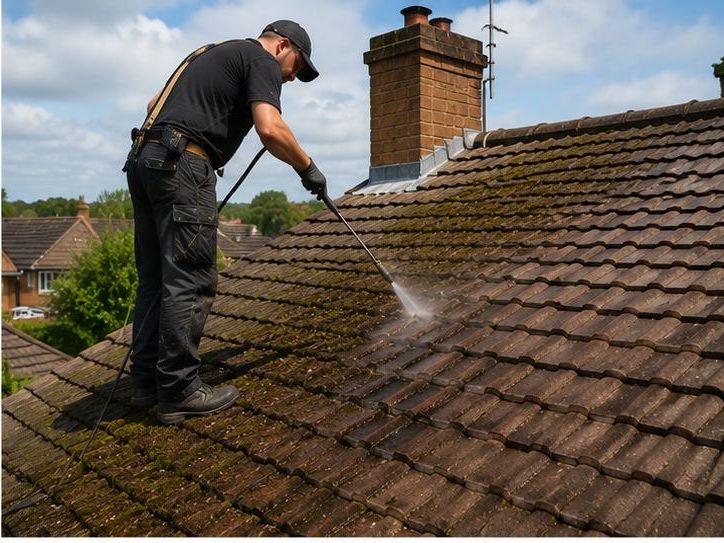
Trees contribute in a more direct way too. Leaf litter, twigs, pollen and general organic debris fall onto roof slopes throughout the year, particularly in autumn, and settle into the slightly textured surface of concrete or clay tiles. That build-up acts almost like a thin layer of soil, giving moss spores something to root into and feed from as they establish themselves and gradually spread across a wider area.
Gardens with dense planting close to the house can add to the problem even without direct overhang. Shrubs, hedges and climbing plants near the eaves restrict airflow around the roofline, keeping the air around the lower courses of tiles more humid than it would otherwise be. That stagnant, moist air is another factor that tips the balance in moss's favour, particularly during the cooler, damper months of the year.
This is why, across Nailsea, we see such a clear pattern: roofs on more open, exposed plots tend to stay relatively clean, while those tucked into leafy, tree-lined gardens accumulate moss noticeably faster, sometimes even on relatively new roof coverings. It is rarely a sign of poor roof quality, it is simply the environment the roof sits in and the shade and moisture that come with it.
Left to build up, moss does more than affect appearance. Thick growth holds water against the tile surface for extended periods, which can gradually accelerate wear, and loose clumps that break away commonly wash into gutters, where they contribute to blockages and overflow during heavy rain, especially in autumn when leaf fall is at its heaviest.
It is worth adding that trees themselves are rarely the problem, and removing mature planting is not usually a sensible or necessary solution. Sensible pruning to reduce direct overhang, combined with periodic professional cleaning, is generally a far more practical way to manage the effect trees have on a nearby roof.
It is also worth noting that different tree species affect roofs differently. Conifers and evergreens cast shade year-round, whereas deciduous trees mainly affect the roof through leaf litter in autumn and reduced shade the rest of the year. Knowing which type of tree is nearby can help explain why moss patterns vary so much between otherwise similar Nailsea gardens.
If your Nailsea roof sits beneath trees or in a shaded garden and moss is building up, contact Brunel Roofing Bristol for an assessment. We will explain what is driving the growth on your particular roof and advise on the right way to deal with it.
Get a Free Quote for Roof Cleaning in Nailsea
Every roof is different — the fastest way to get an accurate answer is a quick chat with our team.