
If you have ever noticed that one side of a roof in Lawrence Weston looks noticeably greener and mossier than the other, you are seeing a genuine pattern rather than a coincidence. Shaded roof slopes consistently carry heavier moss and algae growth than sun-exposed ones, and understanding why explains a lot about how to manage it.
Moss depends on damp conditions to establish and spread, and shade is one of the biggest factors influencing how quickly a roof surface dries out after rain. A north-facing slope, or any pitch shielded from direct sun by a neighbouring building, a chimney stack, or nearby trees common around parts of Lawrence Weston, stays noticeably damper for longer after wet weather than a slope that gets full sun through the day.
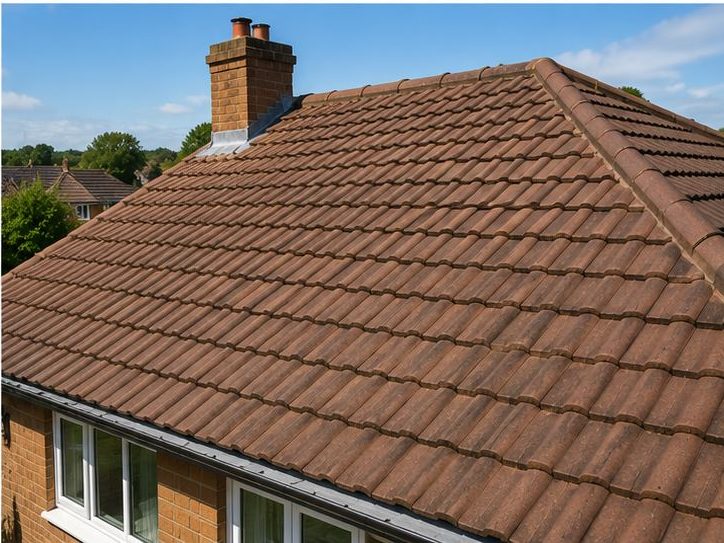
That extended dampness is exactly the environment moss spores need to take hold. Once established, a patch of moss actually reinforces its own growing conditions, since the moss itself holds moisture against the tile surface, keeping that section of roof damper still and making it easier for growth to spread further across the same slope.
Airflow plays a supporting role too. Shaded areas of a roof, particularly where a property sits close to another building or has features that block wind, tend to get less natural drying from breeze as well as less sun. Without either sun or airflow to dry the surface, moisture simply lingers on the tile for much longer stretches of time.
This is why it is common to see one roof slope on a Lawrence Weston property looking almost entirely clean while the opposite slope carries a thick green coating, even though both are made from identical tiles and exposed to the same rainfall. The difference comes down almost entirely to how much sun and airflow each slope actually receives.
Knowing this pattern is useful when it comes to managing moss long term. Shaded slopes will generally need more frequent attention than sun-exposed ones, and where practical, reducing overhanging branches or other sources of shade can help slow how quickly moss returns after a professional clean.
It also means a fair comparison between neighbouring Lawrence Weston properties, or even between two roof slopes on the same house, needs to account for orientation and shading before drawing conclusions about how well either roof has been maintained. A heavily mossed north-facing slope on an otherwise well cared for property is not unusual, and it says more about sun exposure than it does about neglect. When we assess a Lawrence Weston roof, we look at exactly this kind of variation between slopes, since it affects both how urgently a clean is needed and how we treat different sections of the same roof.
The time of year can also make this contrast more or less obvious. Growth tends to look most pronounced through the damper autumn and winter months, when a shaded slope rarely gets the chance to dry out fully between spells of rain, while the same roof can look somewhat less stark in a dry summer stretch, even though the underlying moss is still very much present underneath.
If one side of your roof in Lawrence Weston is noticeably greener than the other, we would be glad to take a look and advise on the right approach, along with a free quote for the work.
Get a Free Quote for Roof Cleaning in Lawrence Weston
Every roof is different — the fastest way to get an accurate answer is a quick chat with our team.