
It's a question that comes up a lot in Filton: why does one side of a roof look almost entirely clean while the other is thick with moss, on the very same property? The answer usually comes down to a combination of a few fairly predictable factors rather than anything unusual about the roof itself.
Sun exposure is the single biggest influence. South and west-facing slopes generally receive more direct sunlight over the course of a day, which dries the tile surface out faster after rain. North and east-facing slopes, by contrast, often stay in shade for much longer, keeping the surface damp for extended periods - exactly the conditions moss needs to establish and spread.
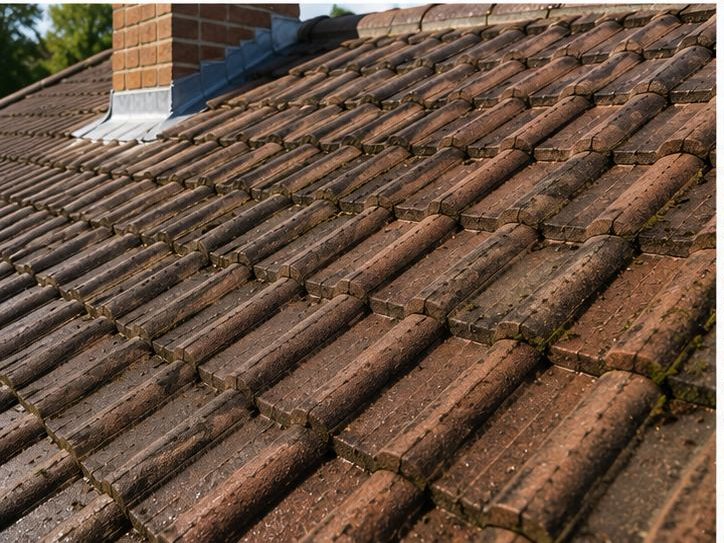
Shade from nearby structures compounds this. In Filton, where properties sit at varying distances from neighbouring buildings, trees, and taller garden features, one slope of a roof might be shielded from the sun for a large part of the day regardless of which direction it technically faces, simply because of what's blocking the light nearby.
Roof pitch plays a role too. A shallower-pitched slope tends to hold moisture on its surface for longer than a steeply pitched one, where rainwater runs off more quickly. Where a roof has sections at different pitches, common on extensions or dormer additions, it's normal to see moss establishing preferentially on the flatter sections first.
Airflow matters as well, though it's less obvious than sun or shade. Slopes that are somewhat enclosed, perhaps tucked behind a chimney stack, a neighbouring wall, or dense planting, don't dry out as efficiently even when they do get some sun, because there's less air movement helping to evaporate surface moisture after rain.
The material and age of the tiles themselves can create small differences too. Where a roof has had partial repairs or replacement tiles fitted at different times, slightly different surface textures or weathering levels between old and newer tiles can mean moss establishes unevenly even across a single slope.
None of this means uneven moss growth is a fault or a design flaw - it's simply the roof responding to its actual environment, which varies from one part of the structure to another. Understanding why one slope is affected more than another can help set realistic expectations for how a clean will look afterwards, and how quickly regrowth might occur on the more shaded sections.
Understanding these differences can also help with planning future maintenance more efficiently. Rather than treating an entire roof as a single unit that needs identical attention, it can make sense to focus more frequent checks on the specific slopes known to be shadier or slower to dry, while more exposed, sunnier sections may need comparatively little intervention over the same period. It also means that after a full clean, it's realistic to expect the shadier slopes to show signs of regrowth sooner than the rest of the roof, which isn't a sign anything went wrong with the work itself.
If you've noticed uneven moss growth across your roof in Filton and want to understand what's driving it on your particular property, Brunel Roofing Bristol can take a look and explain what's happening slope by slope.
Get a Free Quote for Roof Cleaning in Filton
Every roof is different — the fastest way to get an accurate answer is a quick chat with our team.