
Keynsham sits in a fairly green, well established part of the area between Bristol and Bath, and that leafy setting is actually one of the main reasons so many tiled roofs across the town develop moss and lichen over time. Understanding what drives this growth helps explain why some roofs are affected far more than others nearby, even on the same street.
Shade and moisture are the two biggest factors. Roof slopes that stay damp for longer after rain, either because they face away from the sun or because they sit in the shadow of a neighbouring property or mature tree, give moss spores a much better chance to settle and establish themselves. It is common to see one side of a Keynsham roof noticeably greener than the other simply because of how sunlight and shade fall across the property through the day and across the seasons.
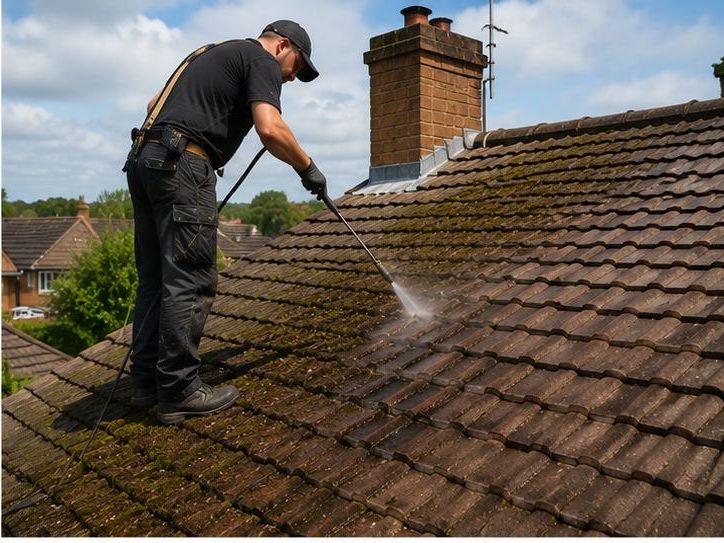
Tree cover plays a direct role too. Keynsham has plenty of gardens with established trees, and overhanging branches drop leaves, twigs and organic matter onto roof surfaces below. This debris holds moisture against the tiles and provides exactly the kind of organic material that helps moss take hold and spread across a roof slope over time.
The tile material itself has an influence as well. Concrete tiles, which are common on a lot of the more modern housing around Keynsham, have a naturally porous surface that gives moss and algae something to grip onto, and this effect increases as tiles weather and age over the years. Older properties with more traditional materials can be affected in a similar way once enough time has passed and the surface has weathered accordingly.
Roof pitch and orientation matter too. Shallower pitched roofs tend to hold onto rainwater slightly longer than steep ones, giving moisture more time to encourage growth, while roofs facing north or shaded by nearby buildings simply dry out more slowly after wet weather than south facing slopes exposed to more sun through the day and better airflow.
Airborne spores are also a factor that is easy to overlook. Even roofs without direct tree overhang can develop moss, since spores travel on the wind and settle wherever conditions happen to be favourable, which across many parts of Keynsham means shaded, damp roof slopes regardless of whether a tree is directly nearby or not.
A small amount of lichen or light algae staining is very common and rarely a cause for concern on its own. It becomes more worth addressing once moss has formed thick, established clumps, since that is when it starts holding significant moisture against the tile surface and creating the conditions for further issues, including gutter blockages further down the line and tile deterioration.
Local rainfall patterns play a supporting role too, since a wetter than average season can accelerate growth that might otherwise have taken longer to establish. This is one of the reasons moss can sometimes appear to build up noticeably within a fairly short space of time, even on a roof that had looked reasonably clear the previous year. None of this means moss is inevitable, but it does explain why some Keynsham roofs need attention more often than others nearby.
If you have noticed moss or lichen spreading across your roof in Keynsham and want to understand what is driving it on your particular property, Brunel Roofing Bristol can take a look and advise on the best approach.
Get a Free Quote for Roof Cleaning in Keynsham
Every roof is different — the fastest way to get an accurate answer is a quick chat with our team.