
Sneyd Park's leafy, well-established character is one of its most attractive features, with many properties set among mature trees and generous planting. Unfortunately, that same greenery is also one of the main reasons roofs in this area are so prone to moss, algae, and lichen growth over time.
Trees affect a roof in several ways at once. The most obvious is shade, since a roof shielded by tree canopy for much of the day receives far less direct sunlight than an open roof nearby, and stays damp for noticeably longer after rain as a result. That extended dampness is precisely the condition moss spores need to establish and spread across the tile surface.
Falling leaves and organic debris compound the shade problem. On many Sneyd Park properties, autumn leaf fall settles into roof valleys, against chimney bases, and along gutter lines, trapping moisture against the tiles even after the surrounding roof has dried. This debris also breaks down over time into a fine organic layer that gives moss spores an easy foothold to root into.
Seasonal changes affect tree-surrounded roofs in Sneyd Park more noticeably than open ones. Deciduous trees drop the bulk of their leaves in a fairly short autumn window, and if gutters and valleys are not cleared shortly afterward, that concentrated debris can sit through the wetter winter months, giving moss and algae an extended head start compared with roofs that do not face this seasonal surge of organic material.
Overhanging branches can bring additional issues too, including sap and residue that create a slightly sticky surface where airborne spores and dust adhere more readily than they would to a clean tile. Combined with the shade and leaf litter, tree-surrounded roofs in Sneyd Park often develop a noticeably heavier, more established covering of growth than equivalent roofs in more open, sunnier positions elsewhere in the city.
None of this means the trees need to go, they are part of what makes the area attractive, but it does mean these roofs generally need more regular attention than average. Where practical, keeping branches trimmed back from directly overhanging the roofline can help reduce both shade and debris, though it will not eliminate the need for periodic cleaning altogether.
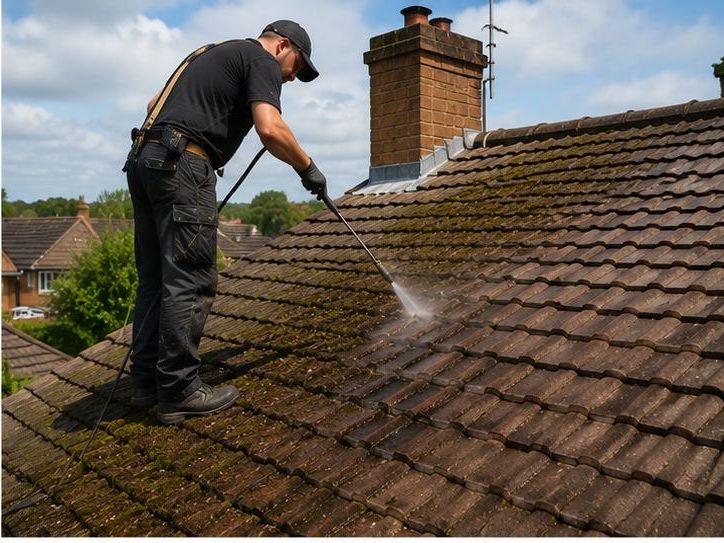
When we clean a tree-surrounded roof, we take the same careful, gentle soft-wash approach we would use anywhere, since these roofs are often just as likely to have areas of ageing mortar or tile wear hidden beneath the growth as any other, and a proper assessment beforehand tells us what we are really dealing with.
It is also worth mentioning that certain tree species shed more organic material than others, and some produce sap or residue that particularly encourages moss and algae to take hold. Even within Sneyd Park itself, two neighbouring properties with different types of surrounding trees can show quite different rates of roof growth, which is one more reason a proper assessment of the specific property, rather than general assumptions, is the right starting point. Even the type of tree can make a measurable difference, since conifers shed needles gradually throughout the year rather than in one autumn surge, which tends to produce a slower but more continuous build-up of organic debris on a nearby roof compared with the seasonal drop from deciduous species.
If your property in Sneyd Park sits under mature trees and has developed visible moss or algae, we would be happy to assess it and advise on the right approach. Get in touch with Brunel Roofing Bristol to arrange a visit.
Get a Free Quote for Roof Cleaning in Sneyd Park
Every roof is different — the fastest way to get an accurate answer is a quick chat with our team.