
Lawrence Hill has a strong stock of older Victorian and Edwardian terraced housing, and it is common on streets across the area to see roofs carrying a noticeably heavier layer of moss than newer builds elsewhere in Bristol. There are practical reasons for this that go beyond simple neglect, and understanding them helps explain why these roofs need a slightly different approach when it comes to cleaning.
Age itself plays a part. Tiles and slates that have been in place for many decades, as is typical on much of Lawrence Hill's older housing, tend to have a more textured, porous surface than newer materials, whether through natural weathering or the manufacturing standards of the time. That texture gives moss spores far more to grip onto and establish in than the smoother surface of a modern tile.
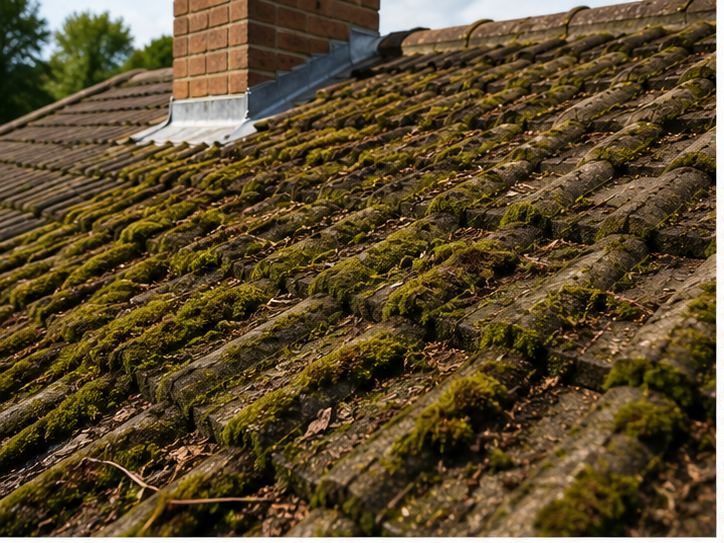
Terraced streets also create their own microclimate in places. Closely packed roofs, narrow gaps between properties, and taller neighbouring buildings can all reduce how much direct sun and airflow reach certain roof slopes, particularly on north-facing sides. Less sun and airflow means tiles stay damp for longer after rain, and that lingering moisture is exactly what moss needs to take hold and spread.
Many older Lawrence Hill roofs have also simply never been cleaned, or not for a very long time, since roof cleaning has traditionally been thought of as optional rather than routine maintenance. Moss growth compounds over years when left entirely alone, so what might have started as light surface staining can, after a decade or more with no attention, become a thick, established layer covering a large part of the roof.
The mortar and pointing around ridge tiles on older properties can also encourage moss and lichen to settle, since aged mortar tends to be rougher and more absorbent than newer material. This is worth noting because it means moss on an older Lawrence Hill roof is often concentrated around the ridge line as well as spread across the tile field itself.
None of this means an older roof is doomed to permanent heavy moss, but it does mean the right cleaning approach matters more than on a newer property. Older, more porous tiles are generally less tolerant of aggressive high-pressure washing, so a gentler soft-wash and biocide treatment is usually the safer route to take the moss back without risking the tiles underneath.
Because so much of Lawrence Hill's housing shares this older character, we come across this pattern regularly and tailor our approach to the age and condition of the tiles on each property rather than applying a one-size-fits-all method.
It is also worth noting that a roof extension or loft conversion, common on some Lawrence Hill terraces as households have adapted older homes over the years, can sometimes alter shading patterns on neighbouring roof sections in ways that were not originally there when the street was first built. A slope that once got reasonable sun exposure can end up more shaded than before, gradually encouraging moss where there previously was little.
If your Lawrence Hill roof has built up heavy moss over the years, we would be glad to assess it properly and talk through a cleaning approach suited to its age and condition, along with a free quote and an honest view of what to expect from the work.
Get a Free Quote for Roof Cleaning in Lawrence Hill
Every roof is different — the fastest way to get an accurate answer is a quick chat with our team.