
Moss does not appear on a Hengrove roof all at once; it starts small, often unnoticed, and gradually spreads across the tile surface over months and years if left untreated. Understanding how and why this spread happens helps explain why a roof that seemed fine a couple of years ago can suddenly look considerably more covered.
It begins with moss spores, which are extremely small and carried easily by wind, birds and even on the clothing or equipment of anyone who has been near an already-affected roof. These spores land constantly on roof surfaces across Hengrove, but they only successfully establish themselves where conditions are right, meaning somewhere damp, shaded and with enough surface texture to grip onto.
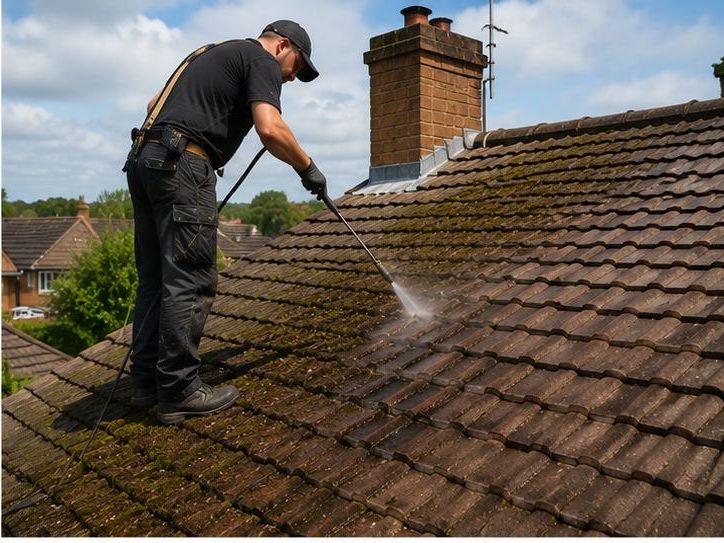
Tiled roofs are particularly suited to this kind of growth because the tile surface, especially once it has weathered over time, develops a slightly rough, porous texture that gives spores far more to hold onto than a smooth, newly laid surface would. The gaps and overlaps between individual tiles also collect small amounts of dust, debris and moisture, creating tiny pockets that are ideal starting points for a new colony of moss.
Once a patch of moss is established, it does not stay contained. As it grows, it produces its own spores that spread to neighbouring areas of the same roof, gradually extending outward from the original patch. This is why moss on an untreated roof so often appears to spread in a rough gradient, thickest and most established at the original point of growth and thinning out toward the edges of the affected area.
Hengrove's mix of tree-lined streets and varied housing means growing conditions differ noticeably from one property to the next, and even from one slope of the same roof to another. A shaded, north-facing section can be well established with moss while a sunnier, more exposed slope on the same roof remains largely clear, simply because the underlying conditions for growth are so different between the two.
Left unchecked, this gradual spread eventually covers a significant portion of a roof's surface, at which point the moss is not just a cosmetic issue but starts contributing to the kind of moisture retention that can affect tiles, mortar and guttering over time.
Weather patterns through the year also influence how quickly this spread progresses. A wet spring followed by a mild, damp summer gives moss spores an extended window in which to establish and grow, whereas a drier stretch of weather can slow the process considerably, even if it does not stop it entirely on the most shaded parts of a roof. This is part of why the rate of moss spread on a Hengrove roof can vary noticeably from one year to the next, even without any change to the roof itself.
Recognising this pattern is useful for Hengrove homeowners deciding when to act, since a roof with moss only just beginning to establish in a shaded corner is a considerably smaller job to address than the same roof left untreated for several more years of continued spread.
If moss has been spreading across your roof in Hengrove and you are unsure how far it has established, Brunel Roofing Bristol can assess the roof and advise on the most suitable way to treat it.
Get a Free Quote for Roof Cleaning in Hengrove
Every roof is different — the fastest way to get an accurate answer is a quick chat with our team.