
Bromley Heath has plenty of leafy, established streets, and it is common to see certain roofs in the area with far heavier moss growth than others just a few doors down. The difference very often comes down to shade, which is one of the single biggest factors influencing how much moss a roof develops over time. Understanding this helps set realistic expectations about how often a shaded roof might need attention compared with a sunnier one nearby.
Moss needs sustained moisture to establish and spread, and shade is one of the most effective ways a roof stays damp for longer than it should. A slope that sits beneath mature trees, or in the shadow of a neighbouring building for much of the day, does not get the direct sunlight needed to dry out quickly after rain, so it remains damp for hours or even days longer than an open, sun-exposed slope nearby.
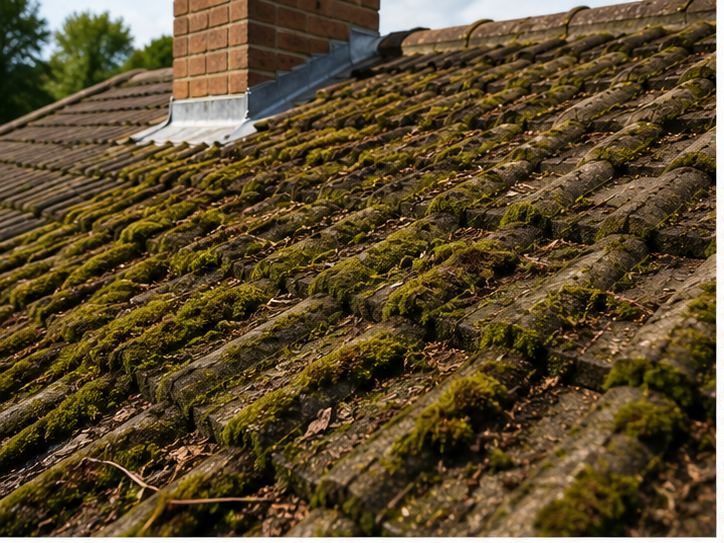
In Bromley Heath specifically, mature gardens and tree-lined roads mean that a good number of roofs have at least one slope that sits in shadow for a meaningful part of the day, particularly during the autumn and winter months when the sun sits lower in the sky and casts longer shadows across gardens and rooftops.
North-facing slopes are affected by this even without any trees involved, since they simply receive far less direct sunlight over the course of a day than south-facing slopes on the same roof. It is common to see one side of a roof in Bromley Heath significantly greener than the other purely because of which direction each slope faces.
Shade also tends to come hand in hand with falling debris where trees are involved. Leaves, seeds and twigs landing on a shaded roof slope add organic material that moss spores can use to establish themselves, compounding the effect of the moisture alone.
None of this means a shaded roof is destined for constant problems, but it does mean shaded slopes generally need more frequent attention than sun-exposed ones, and it is worth being realistic that moss is likely to return somewhat faster on these areas even after a thorough clean, simply because of their position.
It is worth noting that shade is not something that can always be avoided or easily changed, particularly where it comes from a neighbour's tree or a nearby building rather than your own garden. In these situations, the realistic approach is not eliminating shade entirely but managing its effects, through more frequent gutter clearing and periodic light checks on the affected slope, so moss is caught and dealt with while still minor rather than being left to build up simply because the underlying cause of shade cannot easily be removed.
Neighbouring boundary hedges and fences, not just trees, can also contribute to shade at ground level and, on lower single-storey extensions in particular, this can be enough to keep a small section of roof persistently damper than the rest of a Bromley Heath property.
If you have noticed one part of your roof in Bromley Heath is consistently greener or mossier than the rest, that is a strong sign shade is playing a role, and we are happy to take a look and advise on the best way to deal with it.
Get a Free Quote for Roof Cleaning in Bromley Heath
Every roof is different — the fastest way to get an accurate answer is a quick chat with our team.