
Walk down many of Bedminster's residential streets and you will notice a fair number of roofs carrying visible moss growth, often more established roofs that have been in place for decades. There are several reasons this particular combination, age and moss, tends to go together so consistently.
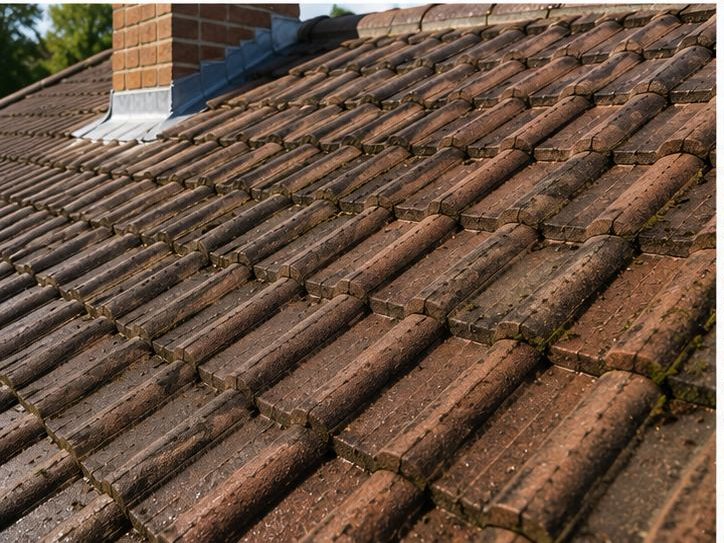
Older roof tiles simply provide a better surface for moss to establish on than newer coverings. Decades of weathering leave tiles with a rougher, more porous texture, and that texture gives moss spores something to grip onto and root into, whereas a smoother, newer tile surface tends to shed spores and growth more easily before it can properly take hold.
Local microclimate effects around Bedminster's position relative to the river and surrounding higher ground can also play a subtle role, with certain pockets of the area experiencing slightly higher humidity or less wind exposure than others nearby. While this is a smaller factor than shade or tile age, it can help explain why moss sometimes appears more prevalent in one part of Bedminster than in a seemingly similar street not far away.
Bedminster's dense terraced housing also plays a role. Closely spaced properties, narrow streets, and in some areas mature trees create pockets of shade that keep certain roof slopes damp for longer than a more open, exposed roof would experience. Shaded, slow-drying conditions are exactly what moss needs to spread, and established housing with settled gardens and street trees tends to have more of this shade than newer developments with less mature landscaping.
Time itself is a straightforward factor too. A roof that has been in place for thirty or forty years has simply had far more opportunity for moss spores to arrive, establish, and spread across the tile surface than a roof installed more recently. Without any intervention in that time, growth naturally accumulates and becomes more visible year on year.
Guttering and drainage on older properties can also contribute. Aging gutter systems that no longer drain quite as efficiently as they once did can allow water to sit for longer near the roof edge, adding to the general dampness that encourages moss to establish, particularly along lower roof slopes.
None of this means moss on an established Bedminster roof is inevitable or untreatable, it simply explains why older roofs in the area tend to show more growth than you might see on a newly built home nearby. With the right cleaning approach, that build-up can be removed safely and the tiles' condition properly assessed.
Neighbouring properties can also influence each other in ways that are easy to overlook. On a tightly packed Bedminster terrace, moss spores can spread from one roof to an adjoining one relatively easily, particularly where roofs share a similar age, pitch, and shade profile. This is part of why moss problems sometimes appear to cluster along a run of several houses at once, rather than affecting properties in an entirely random pattern up and down the street. Recognising these combined factors helps explain why two seemingly similar homes nearby can end up with quite different roof conditions over time.
If your established Bedminster property has a roof that has accumulated visible moss over the years, it is worth having it looked at rather than treating it as an unavoidable feature of an older home. Brunel Roofing Bristol can assess the roof and advise on the most appropriate way to clean it.
Get a Free Quote for Roof Cleaning in Bedminster
Every roof is different — the fastest way to get an accurate answer is a quick chat with our team.