
If you have noticed that one side of your roof in Hanham is considerably greener than the other, you are seeing a very common pattern rather than a coincidence. North-facing roof slopes are consistently more prone to moss growth than those facing south, and the reason comes down almost entirely to sunlight, or the lack of it.
A south-facing slope gets direct sun for a large part of the day, which helps it dry out quickly after rain and keeps the surface warmer and less hospitable to moss spores trying to establish themselves. A north-facing slope, by contrast, receives far less direct sunlight, sometimes very little at all depending on the property's surroundings, which means it stays damp for much longer after any wet weather.
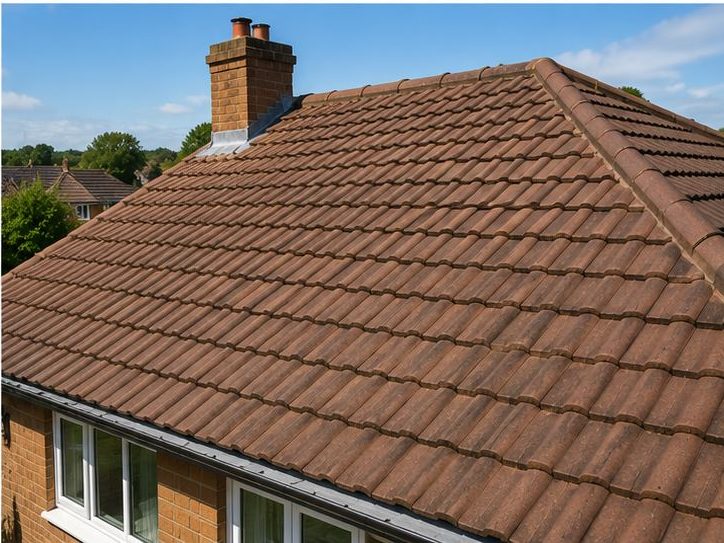
This difference matters a great deal in a climate like Bristol's, where rain is frequent throughout the year. On a well-lit slope, moisture from rainfall evaporates relatively quickly. On a shaded north-facing slope, that same moisture can linger for days, giving moss spores exactly the damp, stable environment they need to take hold and start spreading.
Hanham's mix of housing adds another layer to this pattern. Properties positioned close to mature trees, tall boundary fencing, or neighbouring buildings often have their north-facing slopes shaded even further, compounding the natural lack of sun with additional overshadowing. It is common to see moss concentrated not just on the north side generally, but specifically in the areas of that slope that get the least light and airflow, such as around chimneys or in valleys.
Understanding why moss favours these areas is useful because it helps explain patterns that might otherwise seem random, and it also means that after a roof has been cleaned, the north-facing slope is realistically the area most likely to need attention again first, since the underlying conditions that encouraged growth in the first place have not changed.
This does not mean moss on a north-facing roof is inevitable or untreatable, simply that it is worth being aware of when thinking about how often a roof might reasonably need checking or cleaning in the future.
Airflow plays a supporting role alongside sunlight. A north-facing slope that is also somewhat sheltered from prevailing wind, perhaps by a neighbouring property or a stand of trees, loses the benefit of air movement that would otherwise help speed up drying even without direct sun. This combination of minimal light and limited airflow is why some north-facing sections of Hanham roofs can stay visibly damp for noticeably longer after rain than other shaded areas that at least benefit from a clear run of wind across the tiles.
Where practical, trimming back overhanging branches near a north-facing slope can help, though on many Hanham properties the shading comes from the building's own orientation or neighbouring structures rather than trees, in which case regular cleaning is simply the more realistic long-term solution.
If one side of your Hanham roof is consistently mossier than the other, Brunel Roofing Bristol can assess the whole roof and advise on the most appropriate way to deal with it.
Get a Free Quote for Roof Cleaning in Hanham
Every roof is different — the fastest way to get an accurate answer is a quick chat with our team.