
Loose ridge tiles are one of the more common issues we are called out to check on older roofs around Shirehampton, where a good number of properties still have their original mortar-bedded ridge lines dating back many decades to when the house was first built or last significantly re-roofed. Understanding why it happens helps explain whether a spot repair will hold for a good while yet or whether something more thorough is genuinely needed sooner rather than later.
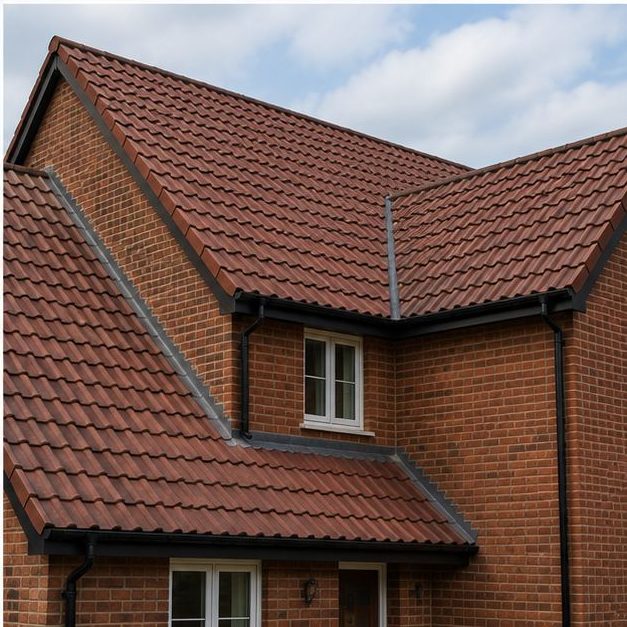
The most frequent cause is simply mortar fatigue building up gradually over the working life of the roof. Traditional ridge tiles are held in place by a bed of sand-and-cement mortar, and that mortar is rigid while the timber roof structure beneath it flexes slightly with temperature swings, wind loading and, over many decades, general settlement of the building itself as it ages. Rigid material bonded to a moving structure eventually cracks, and once a crack forms, water gets in behind it, freezes and thaws through winter, and gradually breaks the bond down further until a tile can be lifted by hand with very little effort at all involved.
Wind exposure accelerates the process considerably in certain locations. Because Shirehampton sits close to open ground near the gorge and estuary, roofs here can catch stronger gusts than more sheltered inland streets set back from the water on higher ground further into the city, and a ridge that is already weakened by cracked mortar is more vulnerable to that additional load pushing and pulling at each tile in turn with every strong blow. What might remain stable on a sheltered roof for a few more years can come loose noticeably sooner where wind exposure is higher, even on roofs of a broadly similar age and original specification.
Poor original workmanship also plays a part on some older roofs, and it is not always obvious from the ground looking up. If a ridge was bedded with too little mortar, insufficient bonding to the tiles below, or without proper haunching at the ends, it was always likely to fail earlier than a correctly detailed one, regardless of how carefully it has since been looked after by successive owners. In these cases, loose tiles are not really a sign of old age catching up with the roof so much as a sign the original installation was never quite right from the very first day it went on. It is also worth remembering that a house may have had several previous owners, each of whom may have commissioned a different patch repair over the years, so the ridge along one roof can genuinely be a patchwork of different ages and standards of work rather than a single uniform installation.
Whatever the underlying cause, loose ridge tiles are worth acting on promptly, since a gap at the top of the roof lets water track down into the structure far more readily than a fault lower down the slope ever would, often travelling some distance along the timbers before it becomes visible as a stain on a ceiling below. Brunel Roofing Bristol can inspect a Shirehampton ridge, identify the specific cause, and advise whether repair or a full ridge renewal is the more sensible next step to take.
Get a Free Quote for New Roof Installations in Shirehampton
Every roof is different — the fastest way to get an accurate answer is a quick chat with our team.