
An unused chimney is easy to forget about, but in Brentry it still needs looking after, and a poorly fitted or damaged cap is one of the more overlooked causes of damp and other problems in properties where the fireplace below has not been lit in years. Just because a flue is disused does not mean it can safely be ignored; if anything, a capped chimney without proper protection can develop issues that go unnoticed for a long time simply because nobody is checking the fireplace regularly.
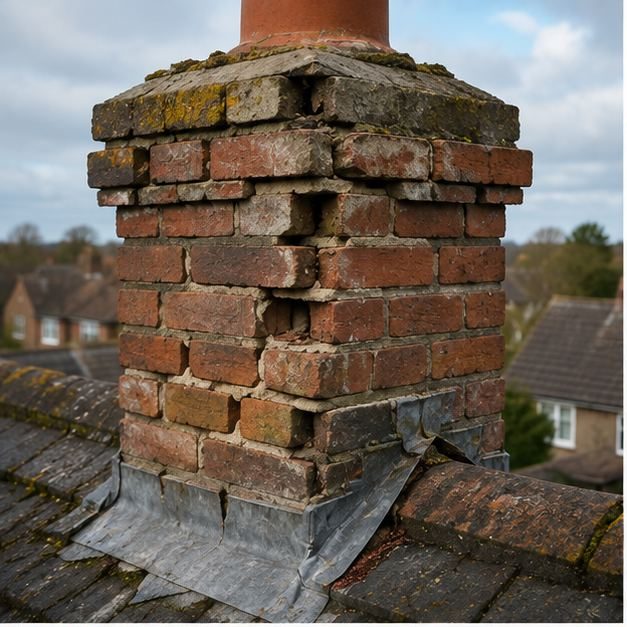
The basic purpose of a cap or cowl on a disused flue is straightforward: keeping rain out while still allowing the flue to breathe, since sealing it completely without any ventilation can trap moisture inside and cause condensation problems within the flue itself. A poorly chosen cap, one that is fully sealed rather than vented, or one that has simply cracked or come loose over time, can let rain track straight down into the chimney breast, leading to damp staining on chimney breasts, ceiling stains near the stack, and in some cases mould developing inside an unused fireplace. Ventilated caps come in a range of styles, from simple mesh guards to more elaborate cowls, and the right choice depends partly on the flue's diameter and partly on how exposed the chimney's position is to wind-driven rain.
Birds and debris are a separate but related problem for unprotected flues. Without a proper cap, an open or poorly covered chimney is an obvious nesting spot, and birds' nests, along with the general debris that accumulates in an open flue over time, can partially or fully block it. This does not just cause a mess; a blocked flue trapping moisture behind it worsens the exact damp problems a proper cap is meant to prevent, and creates a fire risk if the flue is ever brought back into use without being checked first.
The flaunching around the base of a cap needs the same attention as it would on an actively used chimney, since a crack here lets water in around the cap's fitting regardless of how good the cap itself is. This is sometimes missed on disused chimneys precisely because nobody is looking at them as closely as an active fireplace that gets used and noticed every winter. In more serious cases, an established nest can obstruct a flue enough to trap significant moisture behind it for months at a time, well before any resulting damp becomes visible on a chimney breast downstairs.
Fitting or replacing a cap on a disused Brentry chimney is generally a modest, straightforward job compared with active-flue repairs, but it depends on safe access to the top of the stack, which usually means the same ladder or scaffold access as any other chimney repair. It is worth combining this with a general check of the stack's brickwork and flaunching while access is already arranged.
If you have a disused chimney at your Brentry property and are not sure it is properly protected, it is worth having it checked. Brunel Roofing Bristol can inspect and fit an appropriate cap or cowl as part of a free quote, with work backed by a 15-year guarantee.
Get a Free Quote for Chimney Repairs in Brentry
Every chimney is different — the fastest way to get an accurate answer is a quick chat with our team.