
Where a chimney stack meets the roof slope, lead flashing is doing one of the hardest jobs on the entire roof, sealing a junction between two very different materials that expand and contract at different rates. It's a job lead does well for decades when properly installed, but it isn't permanent, and on many properties in Kingsweston the original flashing is now old enough to be showing its age, particularly where it hasn't been touched since the roof itself was last worked on, sometimes going back further than anyone currently in the house can remember.
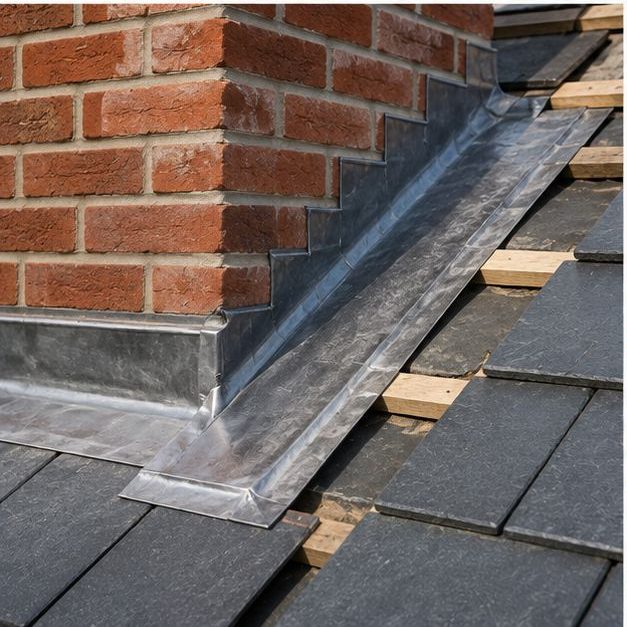
Flashing failure tends to happen in one of a few specific ways: the lead splitting or cracking as it becomes brittle over time, the edges lifting away from the mortar joint they were originally dressed into, or, less commonly, the lead being stolen or damaged and replaced with an inadequate substitute. Any of these leaves a gap for water to work its way behind the flashing and into the roof structure beneath, often slowly enough that it isn't noticed until damp has already reached the plaster indoors.
It isn't only the main flashing that matters. Soakers, the small individual pieces of lead dressed in under each course of tiles or slates along the sides of the stack, and the back gutter that diverts water around the upslope side of the chimney, are just as important and just as prone to failure, often without being visible at all until the roof covering is disturbed or an inspection is carried out from the loft. A back gutter that's blocked with debris rather than actually damaged can cause exactly the same symptoms, which is why a proper inspection matters more than a quick glance.
A leak that seems to come from around the chimney doesn't always show up directly beneath the actual fault indoors, since water tracks along rafters and battens before finding a way through the ceiling. This is why tracing a leak properly, rather than assuming the nearest visible flashing is the culprit, matters for getting a lasting repair rather than a repeat call-out a season or two later.
Where flashing has failed in one localised spot, a repair may be enough, but where the lead is uniformly aged across the stack, full replacement tends to be the more sensible option rather than patching the same ageing material repeatedly. Code 4 or Code 5 lead, dressed properly into the brickwork joints, is standard for most domestic chimney work of this kind, with the gauge chosen to suit the size and exposure of the particular stack in question.
If you've had a leak near a chimney breast, or noticed lifted or cracked lead on the stack itself, it's worth having it looked at before the next spell of heavy rain finds the same gap. Brunel Roofing Bristol carries out lead flashing repairs and replacements on chimneys across Kingsweston, backed by a 15-year guarantee on all completed work.
Get a Free Quote for Chimney Repairs in Kingsweston
Every chimney is different — the fastest way to get an accurate answer is a quick chat with our team.