
Finding the actual source of a chimney leak is rarely as simple as looking at the ceiling stain and assuming the problem is directly above it. On Henleaze's often larger and more architecturally complex period properties, chimneys can have several potential failure points, and working through them methodically is what actually leads to a lasting repair rather than a series of guesses that may not solve the underlying issue at all.
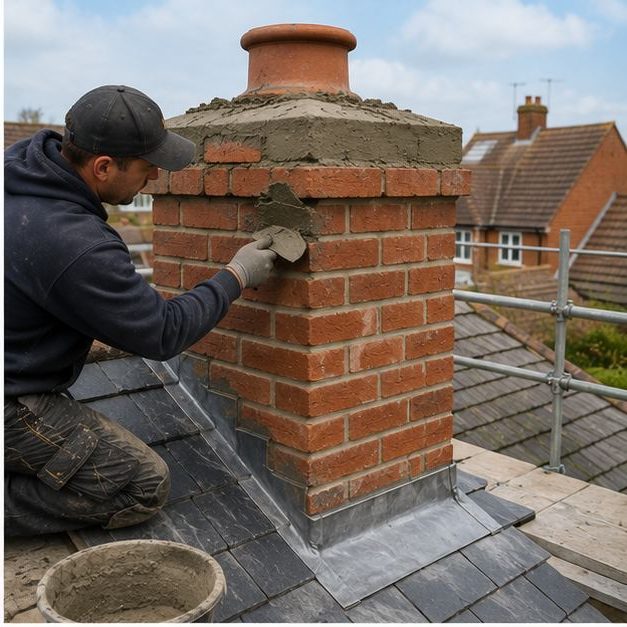
The first useful distinction is between penetrating damp and condensation. Penetrating damp means water is physically entering through a defect somewhere on the stack — worn mortar, cracked flaunching, or failed lead flashing — and tends to worsen noticeably after heavy or wind-driven rain from a particular direction. Condensation, more common on a disused or capped flue, develops when warm, moist air from inside the house meets cold brickwork and condenses, producing damp staining and often a musty smell without any external water ingress at all. The fixes for each are completely different, so this needs establishing before anything else is attempted or agreed with the homeowner.
Where penetrating damp is suspected, the next step is checking each potential source in turn: mortar condition across all visible faces of the stack, the flaunching and pot seating at the top, and the lead flashing, soakers, and back gutter at the roof junction. On a Henleaze property with a more complex roofline — perhaps with the chimney meeting more than one roof pitch — there are simply more junctions and more lead detailing to check than on a straightforward single-pitch roof found elsewhere in the city. Where several possible sources exist on a complex older roofline, some roofers use a controlled water test, directing water at one section of the stack at a time, to narrow down the likely entry point with more confidence.
It's worth bearing in mind that water often travels before it becomes visible. A leak can run along a rafter, follow the inside face of a chimney breast, or track some distance from its actual entry point before finally showing as a stain, which means the room and ceiling location of the damp patch is a useful clue but not a reliable map to the source itself, however tempting it is to assume the two are directly connected.
A methodical inspection, checking each element in turn rather than fixing the first defect spotted, is what avoids the frustrating experience of repairing one issue only to find the leak persists because the actual cause was somewhere else on the stack entirely, requiring a further visit and additional cost to resolve properly. Keeping a simple record of when a leak appears, and in what weather, can genuinely help narrow things down before an inspection even begins, particularly on a property with more than one possible entry point.
If you've got a chimney leak in Henleaze that's proving hard to pin down, Brunel Roofing Bristol can carry out a free, thorough inspection to trace the real cause before recommending any repair work.
Get a Free Quote for Chimney Repairs in Henleaze
Every chimney is different — the fastest way to get an accurate answer is a quick chat with our team.