
Rain finding its way in around a chimney is one of the more common causes of a roof leak, but the good news is that most of the entry points are well understood and, once identified, reasonably straightforward to address properly. The harder part is usually working out which one is actually responsible in a given case, since more than one small issue is sometimes contributing to the same leak at once, each playing a partial role rather than one being solely to blame.
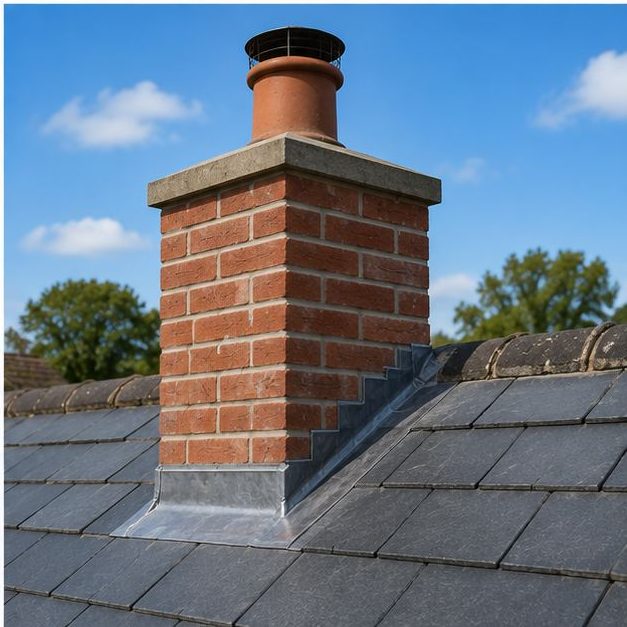
Flashing is the first place to look. The lead dressed around the base of the stack is specifically there to stop rain running down the chimney and off the roof slope from getting under the tiles at the join, and it is also the single most common source of chimney-related leaks once it starts to lift, crack, or pull loose from the mortar joint it was originally set into. Checking for visible gaps, lifted edges, or a previous sealant repair that has perished is a sensible starting point, ideally with a proper look from up at the stack rather than binoculars from the garden.
At the very top of the stack, cracked or eroded flaunching lets rain track straight down inside the flue rather than being shed away from it, and this is a particularly easy source to overlook since it sits above normal sightlines and is hard to inspect properly without getting up close to the stack. A pot that looks loose is often the visible symptom of exactly this problem underneath it.
Where a flue is disused and open, or lacks a cowl, that is effectively an uncovered channel straight down into the chimney breast, and fitting an appropriate rain cowl is one of the more cost-effective ways to stop water getting in through that route specifically. For flues still in occasional or seasonal use, the right cowl type needs a bit more thought so it does not restrict airflow while doing its job.
Beyond the chimney itself, keeping nearby guttering and any back gutter behind the stack clear of debris matters more than people expect — a blocked gutter can cause water to back up and sit against brickwork or flashing for far longer than it should, giving it more opportunity to find a way through a weak point that might otherwise have coped fine.
If rain has been getting into a property near a chimney breast, tracing the actual entry point properly is worth doing before attempting any fix, since guessing wrong just means paying for a repair that does not solve the problem. Brunel Roofing Bristol offers free inspections across Frenchay and will identify the genuine cause before recommending any work, so you know exactly what you are paying for, and why, before any work is booked in.
Get a Free Quote for Chimney Repairs in Frenchay
Every chimney is different — the fastest way to get an accurate answer is a quick chat with our team.