
A leaking chimney can have several different causes, and in Yate, where housing spans decades of construction, we see the full range regularly — from failed pointing on older brick to flashing issues on more recent builds. Understanding what's actually causing a specific leak is the essential first step, since the wrong repair simply means the leak returns, sometimes within only a few weeks of the original work being carried out. Because several causes can produce fairly similar symptoms indoors, homeowners often end up treating the wrong part of the chimney on a first attempt.
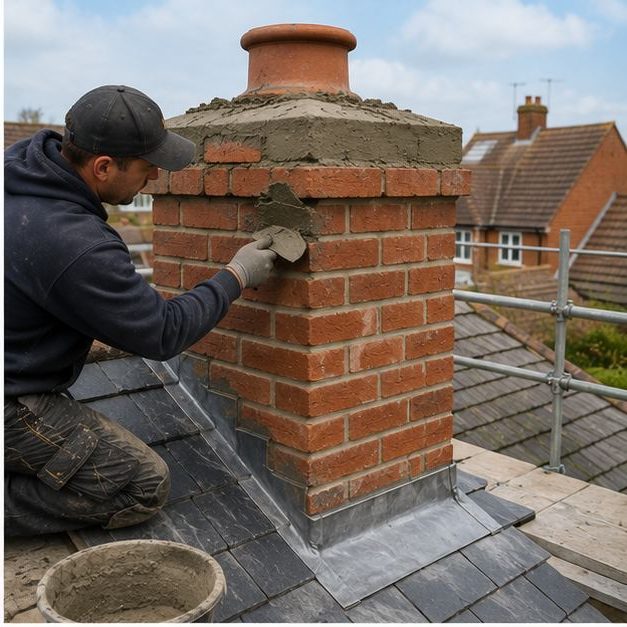
Failed mortar is one of the more common causes, where eroded or missing pointing lets rainwater soak directly into the brickwork, sometimes for a long period before it becomes visible as damp inside the property. Lead flashing, soakers and back gutters are another frequent source, particularly where lead has aged, corroded or worked loose from the surrounding roof covering over time, letting water past a junction that should otherwise be fully watertight.
Cracked flaunching at the top of the stack, or a chimney pot that's cracked or poorly seated, can also let water track straight down inside the flue, and on disused or capped chimneys, inadequate weathering at the top can allow water in even though no fire has been lit in years. Each of these produces symptoms that can look similar from inside the house, which is why proper diagnosis matters more than a quick guess based on where the damp happens to appear. This is one of several reasons a proper inspection, rather than an assumption based on where the damp first appears, tends to save both time and money in the long run.
Repair options range from straightforward and inexpensive, such as repointing or a flashing repair, through to more involved work like flaunching renewal, pot replacement, or in more serious cases a partial rebuild where deterioration has progressed too far for simpler fixes. The right option depends entirely on what the inspection actually finds, rather than a one-size-fits-all approach applied without checking the specific stack in question. Keeping a simple note of when a leak appears, and in what weather conditions, can also give useful clues that help narrow down the likely cause before an inspection even begins.
It's also worth having disused or capped chimneys checked as part of a wider leak investigation, since it's easy to overlook a flue that's no longer used as a possible source, when in practice a poorly weathered cap or missing pot cover can let water in just as readily as an actively used chimney.
If you've got a leak connected to a chimney in Yate, the most reliable way to stop it for good is a proper inspection that identifies the actual source before any repair begins. Brunel Roofing Bristol offers free inspections across Yate, with 24-hour emergency call-out available where storm damage or a serious leak needs urgent attention.
Get a Free Quote for Chimney Repairs in Yate
Every chimney is different — the fastest way to get an accurate answer is a quick chat with our team.