
The right roofing depends on the house, its age and how exposed it is. Here is how we think about pitched roofs, flat sections and details around Bromley Heath.
Bromley Heath is mostly later 20th-century housing with some older cottages, and the edges are open and windy. That combination shapes what works. The best roofing is not a single material; it is a covering and a set of details chosen to cope with the weather and match the house. Here is how it breaks down.
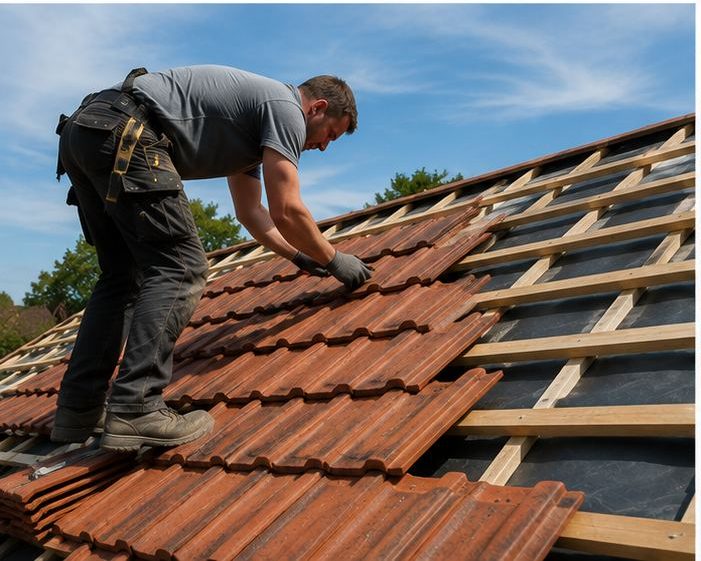
Pitched roofs on later 20th-century homes
Most estate houses have tiled pitched roofs, usually concrete or clay. Often the covering is sound and needs repair at the ridge, hips or edges, not wholesale change. Where it is worn out, a full re-roof with new battens and underlay is the honest answer. We assess the whole slope before suggesting either. Most roofs need less than people fear. Concrete and clay tiles each wear in their own way, so we look at which you have and how it has aged.
Exposure changes the details
On windy ground, fixings and edge details matter more. Tiles near the verge and ridge need to be secure, and mortar edges tend to fail. A dry verge, with mechanically fixed units, resists wind lift at the gable edge and gives a tidy finish. Ridge and hip work is done with the exposure in mind. Exposure is the main reason mortar edges fail first. We also check the battens and underlay beneath, since wind drives rain into any weak spot.
- Secure fixings on exposed slopes
- Dry verge units at gable edges
- Properly bedded or fixed ridge tiles
- Gutters sized and fixed for heavy rain
Older cottages
Cottages may have irregular slopes, older tiles or slates and timber that has seen a lot of weather. Matching materials and respecting how the roof was built matter more than speed. We look closely, repair what can be saved and explain where more is needed. Lead flashings and chimneys on older properties get careful attention. Sympathetic repair keeps the character of the building.
Flat roofs on extensions, garages and porches
Many homes have flat sections. The right system, whether single-ply rubber, fibreglass or felt, depends on the shape and use. Good falls, secure edges and sound upstands are as important as the covering. Where a flat roof is failing across its surface, replacement is more honest than repeated patching. We explain the options and recommend one. We check the outlets and falls so the water has somewhere to go.
The roofline and the whole-roof view
Fascias, soffits and gutters carry water off the roof and protect the timbers. UPVC is very low maintenance and suits many houses. We take a whole-roof view, then explain what is urgent and what can wait. Planning or Building Regulations checks may apply, and we advise before work starts. There is no pressure to do everything at once. Gutters and fascias on open ground see a lot of weather, so we check them as part of the visit.
Frequently Asked Questions
Is a full re-roof ever necessary?
Yes, when the covering, battens and underlay are worn throughout. Often repairs are enough. We tell you which applies after inspecting the roof, and we do not recommend more than the roof needs. Many roofs can be repaired and carry on for a good while.
Do windy sites need a different roof?
Not a different material, but better fixing and edge details. We pay attention to ridge, hips and verges and use secure systems where wind lift is a risk. Fixings and edges are the details that matter on exposed ground.
What roofing suits an older cottage?
One that respects the original build and matches existing materials where possible. We look at what is there, repair what is sound and discuss options if replacement is needed. We always check what is on the roof before suggesting changes.
Talk to our team about general roofing services in Bromley Heath
Every roof is different — the fastest way to get an accurate answer is a quick chat with our team.