
It's a fair question, and the honest answer is yes, to a degree, by design. Roof tiles are never intended to form a completely sealed, waterproof skin on their own. They're overlapped to shed the great majority of rainfall running down the slope, but some wind-driven rain will always find its way past the tiles themselves, especially during the kind of horizontal, gusting rain that comes with a genuine storm rather than a gentle shower.
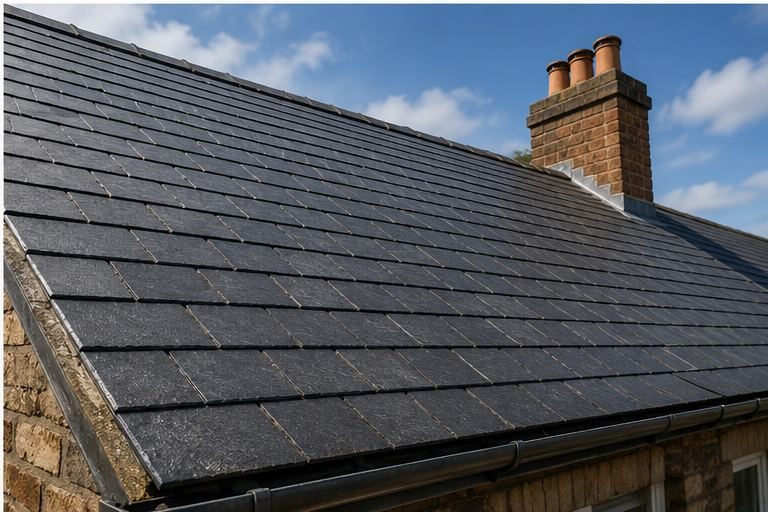
What actually keeps a Bradley Stoke home dry in that situation is the underlay, a waterproof or water-resistant membrane fitted beneath the tiles across the whole roof. Its job is to catch anything that gets past the tile layer and direct it safely down towards the guttering, rather than letting it soak into the timber structure underneath. In a well-maintained roof, this two-layer system copes with heavy rain without any water reaching the inside of the property at all, even during a prolonged downpour.
Problems tend to start when one of those two layers is already compromised. A tile that's cracked, slipped, or missing removes a section of the primary defence, putting more pressure on the underlay beneath it for longer than it's designed to handle. Similarly, an underlay that's aged, torn, or was damaged during the same storm that dislodged a tile can let water straight through to the timbers, even if the tiles above look largely intact from the ground and nothing seems obviously wrong at first glance.
Steeper roof pitches generally cope better with heavy, wind-driven rain than shallow ones, since gravity helps shed water faster before it has much chance to be pushed sideways under a tile edge. This is one of the reasons certain roof shapes and lower-pitched extensions or dormers on Bradley Stoke's newer housing can be more prone to this kind of ingress during severe weather than the main roof slope, and worth keeping a closer eye on after a storm.
Older or lower-grade underlay materials, sometimes found on properties that haven't had roofing work done since they were built, are also more likely to have become brittle over time, reducing their ability to cope with sustained wind-driven rain even where the tiles above remain in good condition. This is one reason a roof that looks fine from outside can still develop an unexpected leak during a particularly wet spell. Keeping gutters clear also plays a small but real part in this picture, since water that's shed efficiently off the tile surface is water that never gets the chance to test the underlay in the first place.
If you've noticed damp patches appearing specifically during or after heavy rain, rather than as a constant drip, it's a reasonable sign that water is getting past the tiles and testing the underlay beneath. Brunel Roofing Bristol can inspect both layers and identify exactly where the weakness lies, rather than simply replacing tiles and hoping the problem doesn't return.
Need Emergency Roof Repairs in Bradley Stoke?
Every case is different — the fastest way to get an accurate answer is a quick chat with our team.