
Of all the leaks that appear after a storm, those associated with a chimney are among the most frequent, and for good reason: a chimney stack introduces several vulnerable junctions into what would otherwise be an unbroken roof slope. For the many properties across Fishponds with a chimney still standing, this is one of the more common sources of post-storm call-outs, whether the chimney is still in regular use or simply left in place as a feature.
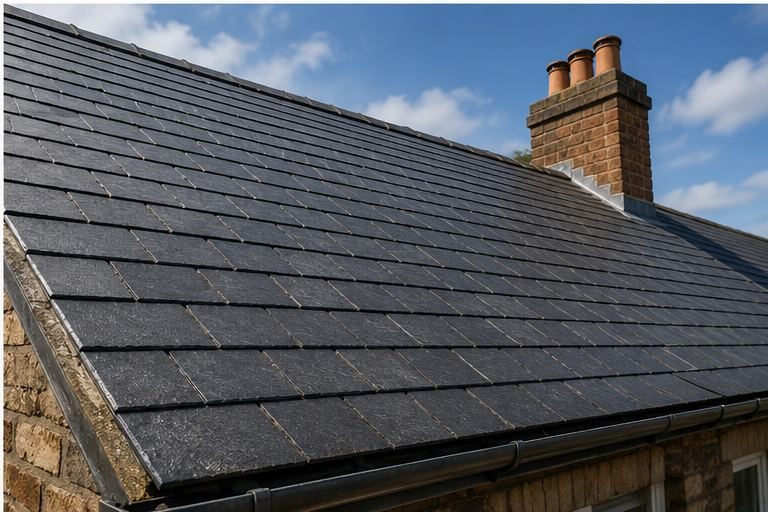
Flashing is usually the first thing to check, since it is the component specifically responsible for sealing the join between the chimney and the surrounding roof covering. High winds can lift or crack this seal, particularly where it has already weakened with age, letting water track in behind it during rain. A gap here does not always look serious from the ground, even when it is letting in a steady amount of water during a longer spell of rain.
The pointing on the chimney stack itself is another common source of leaks after a storm, since eroded or cracked mortar between the bricks allows water to soak into the masonry rather than shedding off the surface. Over time, and especially after a storm has driven rain hard against an exposed stack, this can lead to damp patches appearing on a chimney breast well below roof level, inside the home, sometimes on an upstairs bedroom wall that shares no obvious connection with the roof above.
A chimney leak can be confusing to trace because water entering at the top of the stack, or through failed flashing, can travel some distance down through the brickwork or along roof timbers before showing as a visible stain, meaning the room where the damage becomes obvious is not always directly connected to the chimney in an intuitive way, which is why a proper, methodical inspection is generally far more reliable than guesswork based purely on where the stain has appeared.
Repairs generally address both the flashing and, where needed, the pointing on the stack itself, since fixing one without the other often means the leak simply finds a different route in during the next storm. Where a chimney is no longer in use, capping it properly can also reduce the amount of rain able to get in through the top of the flue, which is a straightforward step worth considering once other repairs are complete.
If you have noticed damp near a chimney breast in your Fishponds home following recent storms, it is worth having both the flashing and the stack checked together. Brunel Roofing Bristol can inspect and repair chimney-related leaks as part of our emergency roofing service, addressing the full cause rather than just the visible symptom.
Need Emergency Roof Repairs in Fishponds?
Every case is different — the fastest way to get an accurate answer is a quick chat with our team.