
A leak that seems to originate around the chimney breast is one of the more common emergency calls received after severe weather, and Henbury's mix of older brick-built properties means chimney-related leaks are a familiar problem for many homeowners in the area, particularly following a spell of sustained wind and rain together over several days. It's worth checking whether the leak coincides with wind from a particular direction, since this can point towards one specific side of the chimney rather than the whole stack.
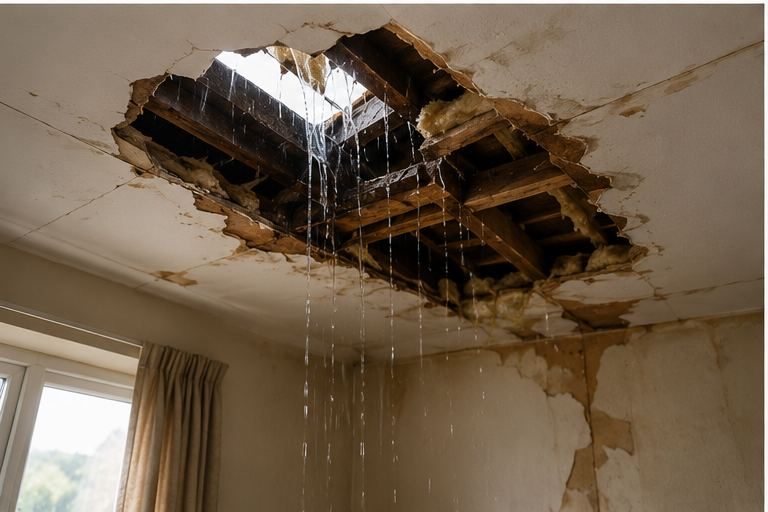
The usual suspects are failed flashing where the chimney meets the roof, deteriorated pointing between the bricks, or a damaged or missing chimney pot allowing more rain into the flue than the chimney was designed to handle. Any one of these can let water track down inside the chimney structure and eventually appear as a stain or damp patch on a chimney breast well below roof level, sometimes on a completely different floor of the house entirely from where the actual fault lies. A chimney breast that feels cold or damp to the touch, even without a visible stain, can be an early sign worth mentioning to whoever comes to inspect the roof.
What makes chimney leaks tricky to diagnose without a proper look is that water entering at the top of the stack can travel a surprising distance before it becomes visible indoors, meaning the location of a damp patch on a ceiling or wall doesn't always point directly to where the fault actually lies, which is why a full inspection from roof level matters so much in cases like this. Older chimneys sometimes have a redundant flue that's no longer connected to a working fireplace, and these can be just as prone to leaking as an active one still in daily use.
An emergency repair typically starts with securing the immediate point of failure, whether that's re-bedding a section of flashing or temporarily sealing a gap in the pointing, to stop further water ingress while a fuller assessment and permanent repair are planned around proper access to the chimney and the true extent of the underlying damage found once examined closely. Where more than one chimney stack serves the property, it's worth checking all of them rather than assuming the leak must relate to the one nearest the affected room.
Because chimneys stand higher and more exposed than the rest of the roof, working on them safely almost always requires scaffolding or specialist access equipment rather than a ladder, which is worth factoring into how quickly a permanent repair, as opposed to a temporary fix, can realistically be carried out on your Henbury property once the damage has been discovered. A roofer will typically check the full height of the stack from roof level, not just the flashing at the base, since damage higher up can still cause a leak lower down.
If water is coming in around a chimney in your Henbury home, getting it looked at quickly prevents a small fault from becoming a larger, more expensive repair. Brunel Roofing Bristol offers 24-hour emergency call-outs to get chimney leaks stopped and properly resolved.
Need Emergency Roof Repairs in Henbury?
Every case is different — the fastest way to get an accurate answer is a quick chat with our team.