
Not every windy night causes roof damage, but strong gusts do leave behind a fairly recognisable set of clues when they have, and knowing what to look for means Downend homeowners can check their own property confidently without needing to climb onto the roof itself or risk their own safety in the process.
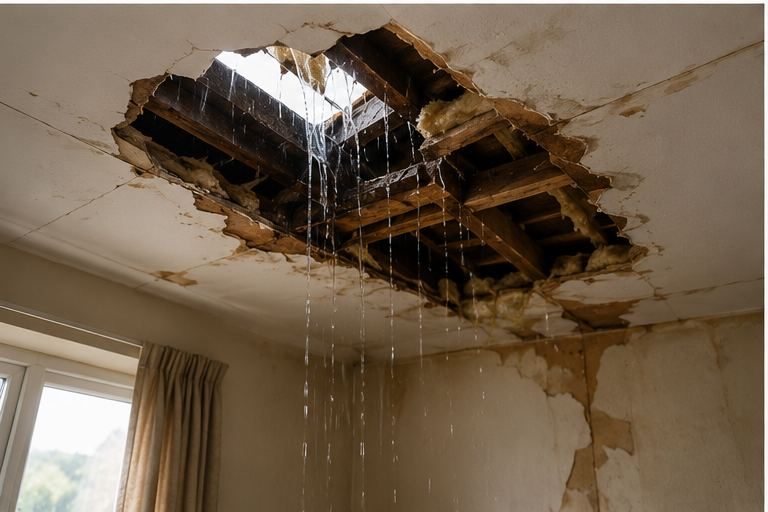
A visual check from the garden or street is the safest and most useful first step. Look along the roofline for any tile or slate that sits at a noticeably different angle to its neighbours, gaps where something appears to be missing, and debris such as broken tile pieces in the guttering, on paths, or caught in nearby shrubs and borders. It is also worth checking the guttering itself for any sections that look dislodged or are hanging at an odd angle, since wind can affect rainwater goods just as easily as the roof covering. A phone camera with the zoom function can be a genuinely useful tool here, letting you get a closer look at the roofline without needing to climb anything, and giving you a record to compare against in future.
The ridge line along the top of the roof deserves a specific look, since a ridge tile that has shifted or cracked is not always obvious from a casual glance but can be a genuine weak point. Similarly, checking around any chimney for flashing that looks lifted or lead that appears to have pulled away from the brickwork is worthwhile, since this is one of the more common places wind damage occurs without a tile actually falling. Comparing photographs taken before and after a storm, where these exist, can also make subtle changes to the roofline much easier to spot.
Inside the property, a check of the loft with a torch can reveal problems that are not visible at all from outside: daylight showing through the roof structure, timber that feels damp to the touch, dark staining on the underside of the roofing felt or boarding, or a musty smell that was not there before. It is worth remembering that any damp patch found is not necessarily directly beneath its actual source, since water entering the roof can travel along timbers or boarding before dripping through at a different point.
If any of these signs are present, it is generally sensible to get a professional opinion reasonably promptly, since wind damage tends not to improve on its own and further weather can turn a minor issue into a more significant repair. Acting within a reasonable window, rather than waiting to see if the problem resolves itself, tends to keep any resulting repair smaller and more manageable.
Brunel Roofing Bristol offers free, no-obligation roof inspections across Downend, giving homeowners a clear answer on whether wind has caused damage and what, if anything, needs to be done about it, without any pressure whatsoever to commit to unnecessary work at all.
Need Emergency Roof Repairs in Downend?
Every case is different — the fastest way to get an accurate answer is a quick chat with our team.