
Water has an unhelpful habit of travelling sideways, and sometimes quite a distance, before it finally shows itself as a damp patch on a ceiling. This is one of the most common sources of confusion after a storm for homeowners in Barton Hill: the leak indoors rarely sits directly beneath the point where water is actually getting into the roof, which makes tracing the real source trickier than it first appears to anyone taking their first look at the problem.
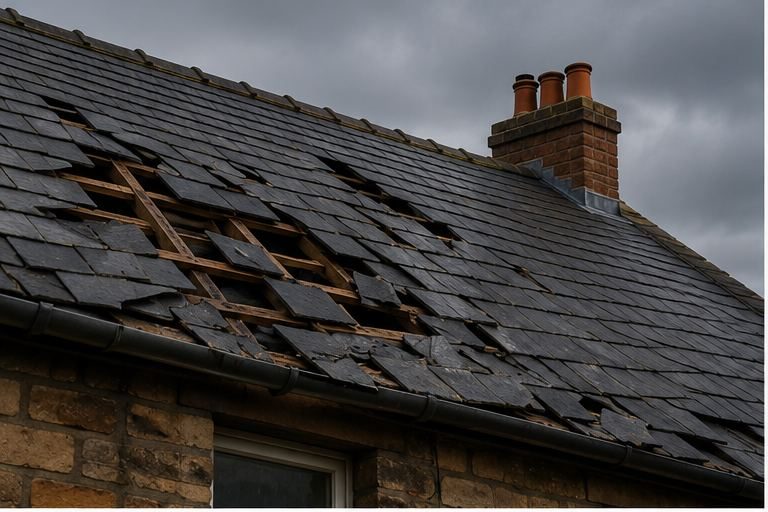
Water entering through a damaged tile, slipped slate, or lifted flashing will typically run along the roofing felt or membrane beneath the covering, following the slope of the roof and any timber battens or rafters, until it reaches a point where it can drop through, often at a join, a nail hole, or a low point in the felt. That drop point can be a metre or more away from where the water first got in, particularly on a steeply pitched roof, which is exactly why guesswork so often leads to the wrong repair. On some roofs, water can travel several metres along a rafter before finally dropping through a gap in the felt.
This is why a proper inspection needs to start higher than the visible damp patch, tracing back up the roof slope from the affected ceiling area to identify likely entry points such as damaged tiles, chimney flashing, or a roof valley further up. Simply patching the spot directly above the stain, without checking further up the roof, often fails to solve the underlying problem, and the same leak tends to reappear at the next heavy downpour.
A few areas are worth checking first because they're common culprits: flashing around chimneys and roof windows, valleys where two roof slopes meet and water is naturally channelled, and the ridge line at the very top of the roof. Any of these can leak in a way that shows up well away from the actual point of failure once water has travelled through the roof structure and found the easiest route down. Even guttering and roof edges can occasionally be the source, particularly after prolonged heavy rain.
For homeowners in Barton Hill dealing with a post-storm leak, resist the temptation to assume the fix is obvious just because a stain has appeared in one particular room. A methodical inspection, checking the loft as well as the roof exterior where it's safe to do so, gives a much better chance of identifying the actual source first time, rather than repairing the wrong spot and having the leak reappear during the next heavy rain.
If you're dealing with a leak that doesn't seem to line up with anything obvious on the roof above it, that's exactly the kind of problem worth having properly diagnosed. Brunel Roofing Bristol carries out free inspections across Barton Hill and offers a 24-hour emergency call-out where the leak is active and needs urgent attention.
Need Emergency Roof Repairs in Barton Hill?
Every case is different — the fastest way to get an accurate answer is a quick chat with our team.