
There is a particular kind of storm that catches homeowners in Cotham out: one where the rain itself is not exceptionally heavy, but strong wind drives it sideways against the roof rather than letting it fall and run off in the usual way. This driving rain can expose weaknesses that ordinary downpours never reach, forcing water into gaps and under overlaps that would otherwise stay perfectly dry, sometimes on a roof that has never previously shown any sign of a problem.
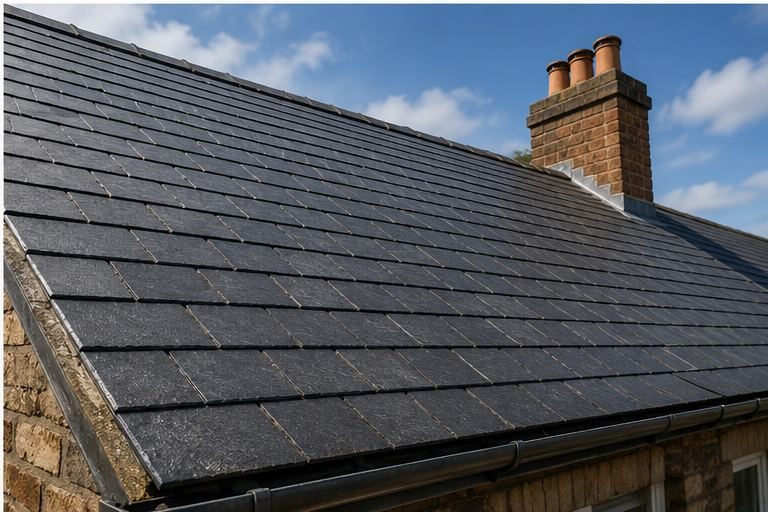
The reason driving rain causes different leaks to standard rainfall comes down to how roof coverings are designed to work. Tiles, slates and flashing all rely on gravity and overlap to shed water downward, but when wind pushes rain horizontally or even slightly upward against the roof surface, it can be forced under a tile edge, past a flashing lap, or into a gap that would never see water under normal conditions. This is particularly relevant around chimneys, roof valleys and verges, where small gaps are more likely to exist even on a well-maintained roof. It also explains why two neighbouring Cotham properties, seemingly identical, can have very different experiences during the same storm depending on which direction their roof slopes happen to face.
Tracing a leak caused by driving rain is genuinely more involved than tracing a straightforward leak, precisely because the entry point may only let water through when wind is blowing from a specific direction. A roofer investigating this kind of leak will typically consider wind direction during the storm in question alongside the physical layout of the roof, looking closely at flashing laps, verge details and valley linings rather than assuming a single obvious cause. Weather records for the specific date the leak first appeared can occasionally help narrow down which side of the roof is most likely to be involved.
Because water forced in this way can travel a surprising distance before it appears indoors, tracking along roof underlay, timbers or boarding before finding a gap in the ceiling below, the visible damp patch inside a property is often some distance from the actual point where rain entered the roof. This is one of the more common reasons a leak seems to reappear in a slightly different spot after what looked like a successful repair.
A methodical approach, checking the roof covering, flashing and junctions systematically rather than patching the first thing that looks slightly worn, tends to give the most reliable long-term result, even if it takes a little longer to reach a conclusion than a quick visual guess. It is generally the difference between a repair that lasts and one that needs revisiting after the next windy spell.
If a Cotham property has developed a leak that seems to follow wind direction as much as rainfall, Brunel Roofing Bristol can carry out a thorough inspection to trace the actual source and recommend the right repair, rather than guessing at a fix that may not hold.
Need Emergency Roof Repairs in Cotham?
Every case is different — the fastest way to get an accurate answer is a quick chat with our team.