
After a storm has passed through Horfield, it is tempting to simply scan the roof from the pavement and assume everything is fine if nothing looks obviously wrong. A proper assessment goes a good deal further than that, because much of the damage a storm can cause is only visible up close or from directly on the roof itself, and some of the most serious problems are not visible at ground level at all. Knowing what a roofer actually looks for helps explain why a full inspection is worth having, even after a storm that seemed to pass without incident.
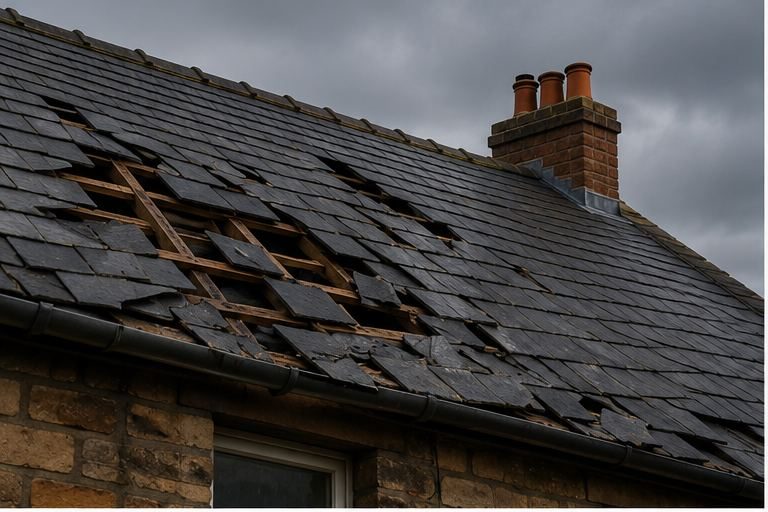
The inspection usually starts with the tiles or slates themselves, checking for anything cracked, slipped out of alignment, or missing entirely, along with a look at the ridge and hip lines where mortar bedding can crack under wind pressure. Roof edges and verges are checked too, since these exposed borders are often where wind first gets a grip on a covering and starts to lift it, working a gap wider with every subsequent gust until a tile eventually comes free entirely.
Flashing is another key area, particularly around chimneys, wall abutments and roof windows, since this is where two different materials meet and rely on a properly sealed junction to keep water out. High winds can lift or tear flashing that has become brittle with age, and even a small tear can let in a surprising amount of water during driving rain. Valleys, where two roof slopes meet, are checked as well, as debris or displaced tiles here can quickly create a blockage that sends water the wrong way, sometimes forcing it up and under the tiles at the edge of the valley instead of down and away.
A roofer will also look for signs of damage caused by fallen branches or debris, which can crack tiles or dent softer roofing materials without necessarily creating an obvious hole. Where a property in Horfield has a flat roof section, this gets separate attention, as felt can split or blister under storm stress in ways that are quite different from pitched roof damage, and these areas are easily missed if the inspection focuses only on the main tiled slopes.
Where access allows, checking the loft space from inside is just as valuable as the external inspection, since staining on the underside of the roof, damp timber or a trail of moisture can confirm exactly where a problem is occurring, even before it has become visible as an indoor leak. This dual approach, outside and in, gives a far more complete picture than either check carried out on its own.
Following any storm, Brunel Roofing Bristol offers a free, thorough inspection for Horfield properties, covering all of the areas above, with a straightforward written quote for any repair work identified. There is no obligation to proceed, so booking a check-up carries no risk beyond the time it takes.
Need Emergency Roof Repairs in Horfield?
Every case is different — the fastest way to get an accurate answer is a quick chat with our team.